PROFS recently asked gubernatorial candidates David Crowley-D, Milwaukee County Executive, and Tom Tiffany-R, Congressman representing Wisconsin’s 7th District, to answer several questions relating to higher education and issues important to UW-Madison faculty.
Responses from David Crowley are below. Tom Tiffany did not respond.
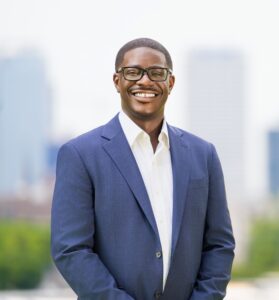
David Crowley
David Crowley’s Responses
What are you goals for your first term in office should you be elected?
Wisconsin needs an economy that works for working people in every part of our state. Families are working hard and still struggling to afford housing, healthcare, higher education, childcare, and utility bills. Too many communities lack the investment they need, and too many decisions are made without listening to the people who live with the consequences.
I will fight to fully fund public schools, keep tuition costs in line while investing in our higher education institutions, raise wages, restore collective bargaining rights, and create good union jobs from urban neighborhoods to rural communities. I will work to make housing, health care, and child care affordable so parents can build stable lives and children can get a strong start.
I will also protect reproductive freedom, voting rights, clean drinking water, and the public lands and Great Lakes that belong to all of us. Our health, our freedoms, and the places we call home shape whether we can build a future in Wisconsin.
Please describe your qualifications and what sets you apart from your fellow candidates.
I grew up in Milwaukee’s 53206 ZIP code, where my family experienced housing instability, food insecurity, and utility shutoffs. Those experiences set me apart from my opponent, and shaped my belief that every family deserves the basics they need to live with dignity and the opportunity to build a better future. They also taught me to listen to people whose needs are too often overlooked in decisions about their communities.
I began my career as a community organizer, working alongside residents to make their voices heard. I served in the Wisconsin State Assembly before becoming Milwaukee County Executive in 2020, the first African American and youngest person elected to that office. Voters reelected me in 2024.
As County Executive, I have worked to expand affordable housing, improve access to health and mental health care, strengthen public services, and create good-paying jobs. I have supported organized labor and worked with local partners to address challenges no single agency can solve alone. Across these roles, I have focused on making government more responsive to the people it serves and giving families more stability and opportunity.
More recently, I graduated from UW-Milwaukee, and believe that we have to do everything that we can to work with the legislature to reduce the costs of higher education so we can continue to make Wisconsin a place where students want to come, and after college, where they want to stay.
While UW-Madison is situated in Dane County, its role as an economic engine benefits the entire state. UW-Madison also has unique needs that are different from the other Universities of Wisconsin. Please tell us how you would support UW-Madison while in office.
As a life-long Wisconsinite, I have seen firsthand the impact UW–Madison has on both Dane County and communities across Wisconsin. Our flagship university prepares the health care workers, researchers, teachers, public servants, entrepreneurs, creative arts professionals and scientists who strengthen our vibrant local communities and state economy.
As governor, I will champion UW–Madison’s role as an economic and cultural engine for Wisconsin. Its reputation as a world-class university attracts talented folks from across the country and around the world, and we must protect that reputation if we want Wisconsin to be a place where ideas that will shape our future are born.
But the value of UW–Madison goes beyond the economy. A great university also strengthens our culture and society by advancing the liberal arts, nurturing culture and history at the local level, and encouraging the pursuit of knowledge for its own sake.
Investing in UW–Madison is an investment in Wisconsin’s future—not only in the workforce we need, but in the knowledge, creativity, and culture that make our state a great place to live.
While the 2025-27 state budget included a substantial increase for UW System, UW-Madison is facing unprecedented cuts in federal funding – cuts totaling $200 million – while still recovering from a ten-year long tuition freeze and flat state budgets. Meanwhile, the other UW System institutions are facing an enrollment crisis. How would you address these concerns if elected?
Wisconsin needs to make higher education more affordable and accessible. With the federal government limiting student loans, more responsibility is falling on states to help students afford college. You shouldn’t have to see tuition go up year after year just to receive the basic education and services you need at a UW school or technical college.
As governor, I will make college affordability a priority by providing stable funding to the UW System and technical colleges and helping students graduate with less debt.
We also need to recognize that different UW campuses face different challenges. UW–Madison is dealing with major uncertainty around federal research funding, while other campuses face declining enrollment. We should support UW–Madison’s research mission while working with regional campuses to respond to the needs of their communities.
We also need to remove unnecessary barriers for Wisconsin students from all walks of life. Young people who grew up here, graduated from our schools, and call Wisconsin home should have the opportunity to continue their education and contribute to our communities. To that end, I support restoring in-state tuition opportunities for undocumented Wisconsin students, and while in the legislature, I sponsored a bill to waive tuition for youth in the foster care system.
A strong UW System means affordable education, strong campuses, and more opportunities for Wisconsin students to build their futures here.
Wisconsin ranks near the bottom of state funding for four-year post-secondary education, while state funding for two-year technical education is among the best in the country. How would you address this disparity in the Legislature?
Wisconsin should make higher education more affordable, not less. Our technical colleges are a national strength, but we have underinvested in our four-year universities for too long. I support increasing state funding for both, with a particular focus on bringing our university funding more in line with what Wisconsin needs.
That means expanding need-based financial aid, supporting tuition-promise programs like Bucky’s Tuition Promise at UW–Madison, and creating affordable pathways through four-year colleges, technical schools, and apprenticeships.
We should also make sure state funding keeps pace with the real cost of educating students. When the state does not provide enough support, universities face pressure to raise tuition or cut programs. Wisconsin’s economy needs more nurses, teachers, engineers, skilled tradespeople, and other professionals. Investing in higher education is an investment in those workers and in the future of our state.
UW-Madison is the only university in the Big Ten without bonding authority, severely limiting the university’s ability to efficiently plan and complete much-needed building and renovation projects. Would you be an advocate among your colleagues to grant UW-Madison this essential tool?
This is an issue that has been in contention for many years. I am open to working with university leaders and additional stakeholders to find a solution that will satisfy all parties.
Shared governance has long played a role in how UW-Madison functions, in fact, shared governance was once enshrined in state statutes. Would you sign legislation returning shared governance language to state statutes if given the opportunity?
University governance works best when the people closest to the mission have a voice in the decisions that affect teaching, research, and campus life. I would sign legislation restoring shared governance to state statutes if given the chance. Shared governance has a long history at UW–Madison, and putting that principle back into state law would reaffirm its importance.
As governor, I would also work to make sure shared governance is more than words in a statute. The people who teach our students, conduct research, and work on our campuses should have a meaningful seat at the table when major decisions are made.
Getting this done will require working with people who do not always agree. I have built strong relationships across government with folks from all perspectives, and I would bring that same approach to the governor’s office. Those relationships can help build the broad support necessary to restore shared governance and strengthen the UW System.
Work on the 2027-29 state budget will begin shortly after legislators are sworn into office. What are your funding priorities?
My priorities include property tax relief and stronger state support for public schools, including special education, so districts are less dependent on referenda and local taxpayers. Our support for public schools must extend to our world-class 2 and 4 year institutions.
I would invest in affordable child care and housing, expand access to health and mental health care, and help communities replace lead service lines and clean up PFAS and other water contamination. I would also target infrastructure that connects people to jobs and services and reduces costs over time, including energy efficiency, roads, transit, and broadband.
I will work with the Legislature on a budget that is transparent about what each investment costs and who benefits. We can provide relief now and make lasting improvements without creating promises Wisconsin cannot sustain tomorrow.
PROFS has long advocated for paid family leave for all employees and is pleased that UW-Madison and the Universities of Wisconsin implemented a modest six-week paid parental leave benefit two years ago. We believe this is just the first step and more needs to be done. Will you support initiatives like those offered by Governor Evers that would expand paid leave to state employees and create a paid leave insurance program for public and most private sector employees in the state?
Yes. Wisconsinites should not have to choose between keeping a paycheck and caring for a newborn, a seriously ill family member, or themselves.
I support expanding paid family and medical leave for state employees and creating a statewide program that gives workers meaningful wage replacement and job protection when they need time away from work. Six weeks of paid parental leave at UW–Madison and across the Universities of Wisconsin was an important step, but it should be the beginning, not the end.
As governor, I would work to make paid leave a reality for working people across Wisconsin. No one should face financial hardship simply because life requires them to care for the people they love.