Author: Michelle Felber

Shared Governance Reception

sift_winnow_arch06_0292UW-Madison will host its first-ever shared governance reception for faculty and staff tomorrow, Tuesday, October 7 from 3 to 5 pm in the Sonata Room of the Gordon Event Center, 770 West Dayton Street. Chancellor Rebecca Blank will deliver remarks at 3:30 pm.

Unlike some universities, shared governance at UW System institutions is codified in Wisconsin statutes and Board of Regent policy. PROFS is a product of shared governance, having been created by the Faculty Senate in 1976. We encourage faculty to attend the reception and learn more about shared governance and how to become more involved in governance groups and committees.


Pocan: State Should Invest More in UW System

Congressman Mark Pocan

Congressman Mark Pocan

Congressman Mark Pocan recently spoke to the Badger Herald editorial board, sharing his thoughts on Governor Walker’s proposed tuition freeze, the academic reputation of UW-Madison, and cuts to National Institutes of Health (NIH) funding.

Pocan said while a tuition freeze can help students, a freeze without increased funding from the state ultimately hurts the university:

“If the state of Wisconsin doesn’t invest money in the UW System, it puts pressure on tuition, and then if he (Walker) freezes tuition, you put double pressure on the UW. I’m not advocating for raising tuition, but I’m advocating for the state putting a proper share into the UW, given how much it is an economic engine for the rest of the state.”

Pocan also told the editorial board about his recently-introduced Next Generation Research Act. The proposal would encourage NIH to promote policies and programs that would improve opportunities for new researchers. The genesis for this legislation began last year when PROFS invited the congressman to UW-Madison to discuss federal funding and the Sequestration.

Regent Committee Meeting Thursday

uw system logoThe University of Wisconsin System Board of Regent Committee on Research, Economic Development, and Innovation will meet in Madison at 1 pm on Thursday, October 2. The meeting is in advance of the regularly scheduled full board meeting on October 9 and 10 in Stevens Point.

The committee will review its history and mission and discuss collaboration with business partners. An overview of how UW System impacts Wisconsin’s economy is also on the agenda.

The meeting will be held in Room 1820 Van Hise Hall and is open to the public.

Voter ID Update

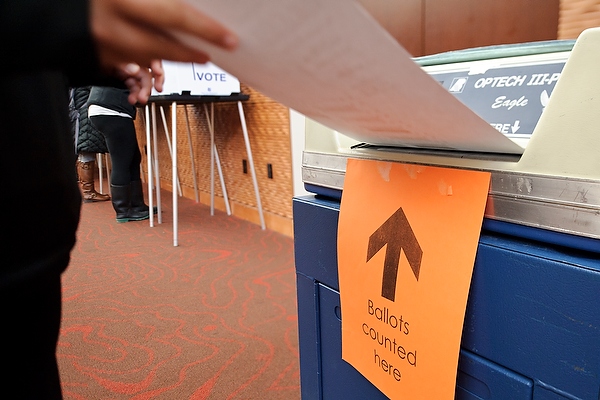
Last week, the United States Court of Appeals for the Seventh Circuit reinstated Wisconsin’s voter ID law (2011 Wisconsin Act 23), which had been on hold since first signed into law in 2011. The three member judicial panel found that recent changes made by the state to ease the process to obtain a free photo ID made the law acceptable.

The ruling means that all voters must show a valid form of photo identification in order to cast a ballot:

  • Wisconsin driver’s license
  • Wisconsin photo identification
  • University of Wisconsin voter identification
  • United States passport
  • United States military identification
  • Federally-recognized tribal identification

UW-Madison will begin issuing voter identification cards at the Wiscard office in Union South next week. The new ID is for voting purposes only and does not replace the Wiscard. More information is here. UW System’s student voting guide is here.

Voters may obtain a Wisconsin photo identification card at their local Department of Motor Vehicles office, and may apply to receive an approved identification card even if they lack the appropriate documents. DMV has said they will to process requests for identification without documentation in about 7 business days. More information is here.

Voters who vote absentee must show photo identification if voting in person or separately mail a photocopy of photo identification.

Opponents of the law have asked the full ten-member appeals court to reverse the law and suspend voter ID until a decision is rendered. They argue the application process is cumbersome and may take too long for voters to receive an approved ID. In addition, several thousand absentee ballots have been mailed without instructions about voter ID, complicating an election process already underway.

PROFS registered against AB 7, legislation that became the state’s voter ID law in 2011.

Milwaukee Journal Sentinel: UW Business Partnerships Could Help State’s Economy

The editorial board of the Milwaukee Journal Sentinel lauds Chancellor Rebecca Blank for her efforts to foster collaboration between UW-Madison and industry in an effort to improve the state’s economy.

“UW prepares thousands of young people each year for a world that is changing before their very eyes as global competition forces U.S. companies to be smarter and leaner. Those are major challenges for a state such as Wisconsin, which is still so dependent on manufacturing and old-line industries. Good for Blank for recognizing the central role UW can play.

Chancellor Rebecca Blank visited the Milwaukee area last week, speaking to the Wisconsin Innovation Network about the role research plays in driving economic growth, visiting longtime research partner GE Medical, and touring UW-Milwaukee’s School of Freshwater Sciences

The full editorial is here.

Governor Walker Reaffirms Support of Tuition Freeze

Governor Scott Walker visited four University of Wisconsin System campuses last week, touting his support for a two-year tuition freeze. Speaking to students in Green Bay, Eau Claire, La Crosse, and Racine, Walker said if elected he would support an additional two-year tuition freeze. Tuition was frozen in 2013 after UW System was found to have about $1 billion in reserve.

UW-Eau Claire Chancellor Jim Schmidt told the Eau Claire Leader-Telegram that an extended tuition freeze would have a detrimental impact on his campus:

“Another two-year tuition freeze would certainly have a major impact on the finances of UW-Eau Claire. We are already anticipating an additional cut of at least $3 million in the coming year to address the current tuition freeze.”

In Green Bay, Walker told students that he supported affordability over additional financial aid to students:

“We know it’s not just about providing more financial assistance, it’s about providing a great price for a UW education that’s low to begin with.”

At UW-Madison, tuition revenue funds approximately one-quarter of the cost-to-continue. UW System is currently working with the Department of Administration on an estimate of cost-to-continue as part of the state biennial budget process.

State Budget Shortfall Projection Rises to Almost $2 Billion

The Legislative Fiscal Bureau announced in a memo to legislators the projected state budget shortfall, or structural deficit, for 2015-17 has risen to $1.77 billion. The LFB projected a deficit of $642 million in May. The revised figures are the result of lower state tax collections and global economic projections.

LFB 2015-17 deficit memo

LFB 2015-17 deficit memo, page 2

Legislative Update

2015-17 Biennial Budget

Last month, Governor Scott Walker directed state agencies to prepare their 2015-17 biennial budget requests, and the Board of Regents approved UW System’s budget proposal last week. The proposal includes $95.2 million for the “Talent Development Initiative,” the implementation of new performance measures, and statutory language changes related to compensation, including the ability to offer merit pay increases.

Budget request highlights:

  • $30 million for a competitive grant program targeting six areas critical to the state’s economy: agriculture, finance, insurance/real estate, healthcare, manufacturing, transportation, and water research.
  • $27.3 to cover a pay plan funding gap. Historically, UW System funds about 30 percent of a pay plan increase with tuition dollars. The two-year tuition freeze has led to a funding gap, with many campuses holding insufficient reserves to cover the pay plan.
  • $24.4 million to increase the number of college graduates statewide, with much of the funding directed to the Course Options program, a program that allows high school students to earn college credits. Additional funding would expand the Flex Option degree program, improve the credit transfer system, and assist working and first-generation college students.
  • $22.5 million in one-time funding to assist with the creation of STEM (science, technology, engineering, and math) jobs. The money will be available to individual campuses through a competitive grant process.

The budget process is lengthy, beginning with formal introduction in January and final passage in late June. PROFS will be involved throughout the entire process and communicate regularly with faculty.

Tuition Freeze
Last spring, Governor Walker announced an additional two-year freeze on University of Wisconsin System tuition. The governor said his proposal was a direct result of the disclosure that UW System would finish 2013-14 fiscal year with almost $1 billion in reserve. The governor first called for a tuition freeze after UW System was found to have just over $1 billion in reserve.

Fall Elections
Governor Scott Walker faces challenger Mary Burke, former Secretary of Commerce and Madison School Board member. Earlier this week, former UW-Madison professor Charles Franklin released a new poll showing the race continues to be a toss-up.

The legislature will experience its largest turnover since the 1970’s. Six state senators and 21 members of the assembly announced their retirement earlier this year. The fall primary was held earlier this month, and the outcome of one primary — the 17th Senate District — is still unclear.

Voter ID
Governor Walker and Attorney General J.B. Van Hollen
recently asked a federal court to reinstate the voter identification law that was passed two years ago, but never enforced as a result of several state and federal court challenges. Many legal experts believe the current federal challenge will keep the law on hold through the fall elections. PROFS lobbied against voter ID legislation.

State Revenue Collections Down

The Department of Revenue announced today that General Purpose Revenue (GPR) collections for fiscal year 2014 are $281 million less than projected. All tax categories were lower than projected except for public utility; liquor and wine; and insurance.

The shortfall means the state faces a $115 million deficit at the start of fiscal year 2015-16, and all but guarantees that the state budget process will be more difficult than expected.

fy 2014 state revenue collections