Tag: elections

Gubernatorial Candidate Questionnaires

PROFS recently asked gubernatorial candidates David Crowley-D, Milwaukee County Executive, and Tom Tiffany-R, Congressman representing Wisconsin’s 7th District, to answer several questions relating to higher education and issues important to UW-Madison faculty.

Responses from David Crowley are below. Tom Tiffany did not respond.

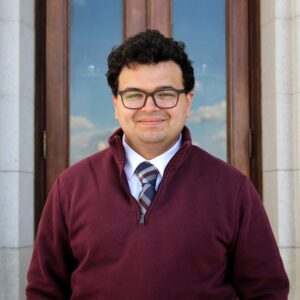
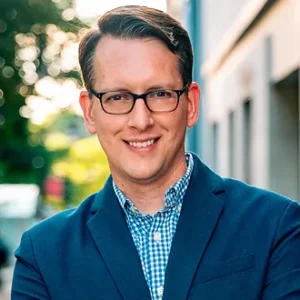
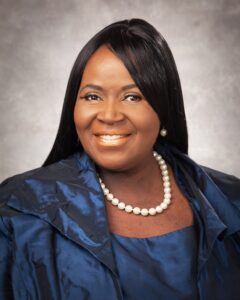
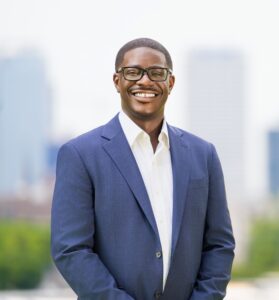
David Crowley headshot

David Crowley

David Crowley’s Responses

What are you goals for your first term in office should you be elected?

Wisconsin needs an economy that works for working people in every part of our state. Families are working hard and still struggling to afford housing, healthcare, higher education, childcare, and utility bills. Too many communities lack the investment they need, and too many decisions are made without listening to the people who live with the consequences.

I will fight to fully fund public schools, keep tuition costs in line while investing in our higher education institutions, raise wages, restore collective bargaining rights, and create good union jobs from urban neighborhoods to rural communities. I will work to make housing, health care, and child care affordable so parents can build stable lives and children can get a strong start.

I will also protect reproductive freedom, voting rights, clean drinking water, and the public lands and Great Lakes that belong to all of us. Our health, our freedoms, and the places we call home shape whether we can build a future in Wisconsin.

Please describe your qualifications and what sets you apart from your fellow candidates.

I grew up in Milwaukee’s 53206 ZIP code, where my family experienced housing instability, food insecurity, and utility shutoffs. Those experiences set me apart from my opponent, and shaped my belief that every family deserves the basics they need to live with dignity and the opportunity to build a better future. They also taught me to listen to people whose needs are too often overlooked in decisions about their communities.

I began my career as a community organizer, working alongside residents to make their voices heard. I served in the Wisconsin State Assembly before becoming Milwaukee County Executive in 2020, the first African American and youngest person elected to that office. Voters reelected me in 2024.

As County Executive, I have worked to expand affordable housing, improve access to health and mental health care, strengthen public services, and create good-paying jobs. I have supported organized labor and worked with local partners to address challenges no single agency can solve alone. Across these roles, I have focused on making government more responsive to the people it serves and giving families more stability and opportunity.
More recently, I graduated from UW-Milwaukee, and believe that we have to do everything that we can to work with the legislature to reduce the costs of higher education so we can continue to make Wisconsin a place where students want to come, and after college, where they want to stay.

While UW-Madison is situated in Dane County, its role as an economic engine benefits the entire state. UW-Madison also has unique needs that are different from the other Universities of Wisconsin. Please tell us how you would support UW-Madison while in office.

As a life-long Wisconsinite, I have seen firsthand the impact UW–Madison has on both Dane County and communities across Wisconsin. Our flagship university prepares the health care workers, researchers, teachers, public servants, entrepreneurs, creative arts professionals and scientists who strengthen our vibrant local communities and state economy.

As governor, I will champion UW–Madison’s role as an economic and cultural engine for Wisconsin. Its reputation as a world-class university attracts talented folks from across the country and around the world, and we must protect that reputation if we want Wisconsin to be a place where ideas that will shape our future are born.
But the value of UW–Madison goes beyond the economy. A great university also strengthens our culture and society by advancing the liberal arts, nurturing culture and history at the local level, and encouraging the pursuit of knowledge for its own sake.

Investing in UW–Madison is an investment in Wisconsin’s future—not only in the workforce we need, but in the knowledge, creativity, and culture that make our state a great place to live.

While the 2025-27 state budget included a substantial increase for UW System, UW-Madison is facing unprecedented cuts in federal funding – cuts totaling $200 million – while still recovering from a ten-year long tuition freeze and flat state budgets. Meanwhile, the other UW System institutions are facing an enrollment crisis. How would you address these concerns if elected?

Wisconsin needs to make higher education more affordable and accessible. With the federal government limiting student loans, more responsibility is falling on states to help students afford college. You shouldn’t have to see tuition go up year after year just to receive the basic education and services you need at a UW school or technical college.

As governor, I will make college affordability a priority by providing stable funding to the UW System and technical colleges and helping students graduate with less debt.

We also need to recognize that different UW campuses face different challenges. UW–Madison is dealing with major uncertainty around federal research funding, while other campuses face declining enrollment. We should support UW–Madison’s research mission while working with regional campuses to respond to the needs of their communities.

We also need to remove unnecessary barriers for Wisconsin students from all walks of life. Young people who grew up here, graduated from our schools, and call Wisconsin home should have the opportunity to continue their education and contribute to our communities. To that end, I support restoring in-state tuition opportunities for undocumented Wisconsin students, and while in the legislature, I sponsored a bill to waive tuition for youth in the foster care system.

A strong UW System means affordable education, strong campuses, and more opportunities for Wisconsin students to build their futures here.

Wisconsin ranks near the bottom of state funding for four-year post-secondary education, while state funding for two-year technical education is among the best in the country. How would you address this disparity in the Legislature?

Wisconsin should make higher education more affordable, not less. Our technical colleges are a national strength, but we have underinvested in our four-year universities for too long. I support increasing state funding for both, with a particular focus on bringing our university funding more in line with what Wisconsin needs.

That means expanding need-based financial aid, supporting tuition-promise programs like Bucky’s Tuition Promise at UW–Madison, and creating affordable pathways through four-year colleges, technical schools, and apprenticeships.

We should also make sure state funding keeps pace with the real cost of educating students. When the state does not provide enough support, universities face pressure to raise tuition or cut programs. Wisconsin’s economy needs more nurses, teachers, engineers, skilled tradespeople, and other professionals. Investing in higher education is an investment in those workers and in the future of our state.

UW-Madison is the only university in the Big Ten without bonding authority, severely limiting the university’s ability to efficiently plan and complete much-needed building and renovation projects. Would you be an advocate among your colleagues to grant UW-Madison this essential tool?

This is an issue that has been in contention for many years. I am open to working with university leaders and additional stakeholders to find a solution that will satisfy all parties.

Shared governance has long played a role in how UW-Madison functions, in fact, shared governance was once enshrined in state statutes. Would you sign legislation returning shared governance language to state statutes if given the opportunity?

University governance works best when the people closest to the mission have a voice in the decisions that affect teaching, research, and campus life. I would sign legislation restoring shared governance to state statutes if given the chance. Shared governance has a long history at UW–Madison, and putting that principle back into state law would reaffirm its importance.

As governor, I would also work to make sure shared governance is more than words in a statute. The people who teach our students, conduct research, and work on our campuses should have a meaningful seat at the table when major decisions are made.

Getting this done will require working with people who do not always agree. I have built strong relationships across government with folks from all perspectives, and I would bring that same approach to the governor’s office. Those relationships can help build the broad support necessary to restore shared governance and strengthen the UW System.

Work on the 2027-29 state budget will begin shortly after legislators are sworn into office. What are your funding priorities?

My priorities include property tax relief and stronger state support for public schools, including special education, so districts are less dependent on referenda and local taxpayers. Our support for public schools must extend to our world-class 2 and 4 year institutions.

I would invest in affordable child care and housing, expand access to health and mental health care, and help communities replace lead service lines and clean up PFAS and other water contamination. I would also target infrastructure that connects people to jobs and services and reduces costs over time, including energy efficiency, roads, transit, and broadband.

I will work with the Legislature on a budget that is transparent about what each investment costs and who benefits. We can provide relief now and make lasting improvements without creating promises Wisconsin cannot sustain tomorrow.

PROFS has long advocated for paid family leave for all employees and is pleased that UW-Madison and the Universities of Wisconsin implemented a modest six-week paid parental leave benefit two years ago. We believe this is just the first step and more needs to be done. Will you support initiatives like those offered by Governor Evers that would expand paid leave to state employees and create a paid leave insurance program for public and most private sector employees in the state?

Yes. Wisconsinites should not have to choose between keeping a paycheck and caring for a newborn, a seriously ill family member, or themselves.

I support expanding paid family and medical leave for state employees and creating a statewide program that gives workers meaningful wage replacement and job protection when they need time away from work. Six weeks of paid parental leave at UW–Madison and across the Universities of Wisconsin was an important step, but it should be the beginning, not the end.

As governor, I would work to make paid leave a reality for working people across Wisconsin. No one should face financial hardship simply because life requires them to care for the people they love.

76th Assembly District Responses

Five Democrats are vying to replace Representative Francesca Hong, one of five Democrats currently running for governor, in the 76th Assembly District. The district reaches from the isthmus to Madison’s north side, including Maple Bluff.

Isaia Ben-Ami and Juliana Bennett’s replies are below. Dina Nina Martinez-Rutherford, Zoe Sullivan and Tony Castañeda did not respond.

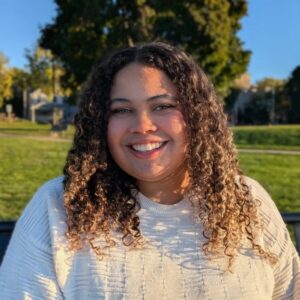
76th Assembly District candidate Isaia Ben-Ami

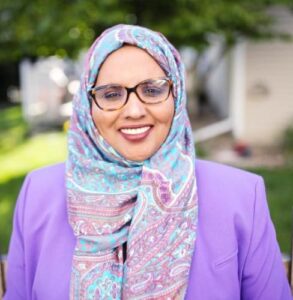
Isaia Ben-Ami

Isaia Ben-Ami’s responses:

What are you goals for your first term in office should you be elected?

We need to repeal ACT 10, fix our school funding formula, and pass a moratorium on data centers. In 2027, Democrats will have a larger say in our state government and possibly even a trifecta. We need to use that political power to meaningfully impact the daily lives of people. We will do that by restoring collective bargaining rights to our public workers and raise wages for workers across the state. We will do that by lowering property taxes and investing in the public schools that are anchors in our communities. We will do that by passing a moratorium on data centers, rolling back their corporate tax credits, and showing that we will stand up to the multi-national corporations trying to exploit our environment. These are all policies that, in a Democratic majority, we can pass in the State Assembly, and with a Democratic Governor, we can make a reality in Wisconsin. As a state representative, I will use my position to ensure that we make the most of our political power to deliver meaningfully impactful policy.

Please describe your qualifications and what sets you apart from your fellow candidates.

I have worked in the legislature for the last 6 years, and I know what it takes to make platform promises into actionable legislation. I have worked with key stakeholders, other legislative offices, and have been involved in negotiations. I am the only candidate with extensive experience in the state legislature. I am also the only candidate who has shown a commitment to electing progressive legislators across the state. In this political moment, we need leaders who will not just state a pro-education platform but are ready to do what is needed to create a state government that supports our institutions of higher education. We only have a short time before 2028 to make lasting change in our government. I am running as a leader who is ready to work for you on day one. Together, we will create a vision for a government that people can believe in.

While UW-Madison is situated in Dane County, its role as an economic engine benefits the entire state. UW-Madison also has unique needs that are different from the other Universities of Wisconsin. Please tell us how you would represent UW-Madison in the Legislature and encourage your colleagues from outside Dane County to understand the statewide benefit of a strong UW-Madison.

As a proud UW-Badger and a lifelong Madisonian, I know that the impact of UW-Madison has on the fastest-growing county in our state. UW-Madison generates professionals who will go on to teach, work, and live across our state. The skills, experiences, and talents that are taught at UW-Madison create the professionals needed in education, agriculture, business, and more. As a legislator, I will tout the economic benefit UW-Madison contributes to our entire state’s economy. In addition, it is important to always recognize that UW-Madison’s status as the flagship university means that it attracts talented individuals from across the nation. We need to uphold its reputation as a world-class university if we want to continue bringing in the talented engineers, scientists, and business professionals who contribute to both the public and private sectors of our state. Lastly, we need to do a better job of highlighting the cultural impact UW-Madison has through liberal arts education. The end goal of education is not creating a better economy, it’s creating a better society. That means valuing the pursuit of knowledge, and supporting artists, philosophers, and musicians that make our society a more vibrant place to live. The limitations of the University are the limitations of the state, and if we do not respect the impact UW-Madison has on our culture and economy, we are doing a disservice to the potential of our state.

While the 2025-27 state budget included a substantial increase for UW System, UW-Madison is facing unprecedented cuts in federal funding – cuts totaling $200 million – while still recovering from a ten-year long tuition freeze and flat state budgets. Meanwhile, the other UW System institutions are facing an enrollment crisis. How would you address these concerns if elected?

The federal cuts to our institutions of hire learning are an attack on progress. But, this attack on progress was not started by Republicans at the federal level, it was started right here in Wisconsin when we decided to keep the state investment in UW-Madison flat, effectively divesting from our flagship state institution over time. We have to be committed to our flagship university’s success if we want to be truly committed to the success of our state. We have to invest in the institutions that have the greatest demand, and that is UW-Madison. More students want to attend our flagship university, and we need to provide the resources necessary to make that university successful.

Wisconsin ranks near the bottom of state funding for four-year post-secondary education, while state funding for two-year technical education is among the best in the country. How would you address this disparity in the Legislature?

Budgets are moral documents. We need to value our four-year institutions because they contribute to the growth & progress of our society. Our post-secondary education systems create professionals that are on the cutting edge of what is possible in the modern world. We cannot continue to undervalue these institutions, or we will sacrifice our progress in science, mathematics, and the liberal arts. While it is wonderful to have access to technical education, and that technical education contributes greatly to our growing economy, it is not the only engine of growth.

UW-Madison is the only university in the Big Ten without bonding authority, severely limiting the university’s ability to efficiently plan and complete much-needed building and renovation projects. Would you be an advocate among your colleagues to grant UW-Madison this essential tool?

Yes. UW-Madison is a flagship university that resides in the fastest-growing part of the state. We need to have continued updates to our infrastructure if we want to continue to be a leader in innovation. I support the use of bonding authority so that we can capitalize our growth in Madison, and ensure we remain a world-class institution for years to come.

Shared governance has long played a role in how UW-Madison functions, in fact, shared governance was once enshrined in state statutes. Would you support legislation returning shared governance language to state statutes if introduced?

Yes. The decisions the university makes directly impact the lives and livelihoods of faculty, staff, and students. As such, they must have a voice in the decision-making process. UW-Madison belongs to all of us, and it is all of our responsibility to steer the ship. I would support returning shared governance language into state statute so that we can restore the rights of faculty, staff, and students.

Work on the 2027-29 state budget will begin shortly after legislators are sworn into office. What are your funding priorities?

Our budget needs to prioritize workers, people, and our planet. In the 2027-29 budget, we must have a repeal of Act 10 and a restoration of the rights taken away from our public sector workers. In addition, we need to invest in our people by making special education a sum sufficient provision, and ensuring every school is given the resources it needs to teach every student in our community. Lastly, we need to fight for a more sustainable economy. We have to invest heavily in a Green New Deal that will create the energy infrastructure we need to move off of fossil fuels and support renewable energy expansion.

PROFS has long advocated for paid family leave for all employees and is pleased that UW-Madison and the Universities of Wisconsin implemented a modest six-week paid parental leave benefit two years ago. We believe this is just the first step and more needs to be done. Will you support initiatives like those offered by Governor Evers that would expand paid leave to state employees and create a paid leave insurance program for public and most private sector employees in the state?

As a legislative aide, I am proud to have worked on Paid-Family and Medical Leave Act and would wholeheartedly support its reintroduction next legislative session. Access to healthcare should not come at the cost of losing your paycheck. In a time where it is harder to afford groceries, childcare, and housing we cannot call healthcare a human right if we do not provide paid family and medical leave.

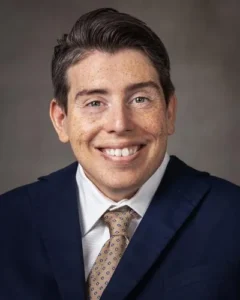
76th Assembly District candidate Juliana Bennett

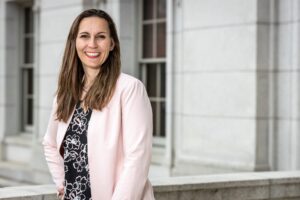
Juliana Bennett

Juliana Bennett’s responses:

What are you goals for your first term in office should you be elected?

My top three priorities are to lower rent and property taxes; fully fund our public schools; and raise wages. We’ll lower property taxes by 44% and fund our schools with the 17¢ Millionaire Tax, AB 1209. We’ll legalize rent control, and use the $2 billion in tax breaks for data centers to build homes instead. We’ll raise our minimum wage to $23/hr and tie it to the cost of living.

I’m ready to fight and win on these issues. We’ll measure progress by affordable homes built, property tax decreases, and wage increases. Along the way, I’m ready to organize across the state to earn votes for the policies Wisconsinites need. And I’ll always be seeking advice and feedback from my constituents to make sure that legislation is addressing their actual problems and making real change.

Please describe your qualifications and what sets you apart from your fellow candidates.

There are three things that set me apart from my opponents:

  1. I am the only candidate with experience and a track record of success in city hall, in the state capitol, and in congress. As the campus alder, I served the needs of UW students by creating an original affordable housing program in collaboration with the city and campus. As a federal legislative liaison at the Wisconsin Housing and Economic Development Authority, I got Derek van Orden and Bryan Steil to sign onto bipartisan affordable housing bills. And in my most recent job as the Chief of Staff to Rep. Angelito Tenorio, I drafted the 100% Clean Energy bill.
  2. I am the only candidate as of July 8th, 2026 that supports the 17 cent Millionaire Tax. This bill meets one of the most pressing needs of this district, to lower property taxes and fund our schools by supplementing school aid with funds from higher income earners.
  3. I am the only candidate endorsed by Madison Area DSA and National DSA.

I’m deeply rooted in community as someone who got their start as a student activist on the UW campus. I’m now ready to take the fight to the state capitol.

While UW-Madison is situated in Dane County, its role as an economic engine benefits the entire state. UW-Madison also has unique needs that are different from the other Universities of Wisconsin. Please tell us how you would represent UW-Madison in the Legislature and encourage your colleagues from outside Dane County to understand the statewide benefit of a strong UW-Madison.

I have four years of experience with elevating the needs of UW-Madison to those unfamiliar and disinterested in serving students on campus. Throughout my time as the UW student alder on the Madison city council, my colleagues told me countless times “I don’t care about students.” This sentiment amongst Madison alders is unfortunately shared amongst many of our representatives in the state capitol.

As state representative, I will make the needs of UW-Madison a priority the same way I did as an alder: organizing and elevating the voices of students, faculty, staff, and alumni. When Madison alders sought to expel student representation from the city council during the redistricting process, I organized a broad coalition, including then Chancellor Blank, to keep the student district together. We won. When luxury high rise developers sought to create unaffordable student housing, I revitalized that coalition to get affordable student housing. We won.

My advocacy as a UW-Madison student and alum will continue in the state legislature. I will fight to fully fund the UW system, invest in affordable student housing, repeal the GOP’s anti-DEI mandate, restore students’ rights to shared governance, and ensure fair compensation and bargaining agreements for faculty and staff. I look forward to making these improvements with an organized coalition of those most directly impacted.

While the 2025-27 state budget included a substantial increase for UW System, UW-Madison is facing unprecedented cuts in federal funding – cuts totaling $200 million – while still recovering from a ten-year long tuition freeze and flat state budgets. Meanwhile, the other UW System institutions are facing an enrollment crisis. How would you address these concerns if elected?

UW is founded upon the Wisconsin Idea – a simple principle that education should influence people’s lives beyond the boundaries of the classroom. Wisconsin Republicans have abandoned this principle which has decimated the university system and the communities that benefit from it.

I will address these issues by restoring Wisconsin Idea. To me, that looks like investing state aid into the UW System to provide a robust educational experience. It looks like prioritizing reopening four-year enrollment of closed UW branches. And it looks like addressing the root causes behind the enrollment crisis. For instance, investment in truly affordable student housing and restoring DEI program funding will help create a welcoming and inclusive campus environment that will attract more students.

Overall, I believe that addressing these concerns first comes through acting upon the demands of those impacted by slashing the UW System budget. For too long, we have been forced to reconcile with the impacts of top-down decisions that from leadership that actively works to silence dissent. As your state representative, I will bring the voice of the many to the state capitol to address these concerns.

Wisconsin ranks near the bottom of state funding for four-year post-secondary education, while state funding for two-year technical education is among the best in the country. How would you address this disparity in the Legislature?

Higher education should be a doorway to opportunity, not a lifetime of debt. Programs at both levels is necessary, but the state must recognize that funding four-year post secondary programs is necessary for the success of students and the state of Wisconsin. As representative, I will fight to give UW-Madison bonding authority immediately and increase state aid to the UW System. I will also advocate to implement statewide student loan forgiveness grants so graduates can build their lives here without being crushed by debt. This will ensure every student can thrive.

UW-Madison is the only university in the Big Ten without bonding authority, severely limiting the university’s ability to efficiently plan and complete much-needed building and renovation projects. Would you be an advocate among your colleagues to grant UW-Madison this essential tool?

Absolutely, yes. We know that not allowing UW-Madison to have bonding authority is a measure to restrict UW-Madison’s financial autonomy. The UW System increased tuition rates in 2024, in part because they do not have the borrowing capacity to remain competitive universities. Because the state does not provide adequate financial resources to UW-Madison, including bonding authority, they take on more students. Then, because UW-Madison cannot build more student housing when they need it, those additional students drive up rents in the local housing market. So, I will advocate to give UW-Madison bonding authority.

Shared governance has long played a role in how UW-Madison functions, in fact, shared governance was once enshrined in state statutes. Would you support legislation returning shared governance language to state statutes if introduced?

Absolutely, yes. As a former member of the UW-Madison Student Services Finance Committee, I know that shared governance is now only a ghost of what it once was in Wisconsin. Students’ rights were stripped by targeted campaigns by the GOP – specifically Robin Vos and Scott Walker – to defund the UW System and reduce the power of faculty and student government to make decisions. They sowed an unprecedented mistrust of shared governance into the legislature that we will need to recover from by restoring authority for faculty and students to act as true partners in decision making with real power.

Work on the 2027-29 state budget will begin shortly after legislators are sworn into office. What are your funding priorities?

The backbone of my core policies (affordable housing, public schools, and raising the minimum wage) is financial reprioritization. Currently, hardworking Wisconsinites pay their taxes expecting our state government to hold up their end of the deal. But, instead of supporting them, our Republican-controlled legislature compiles multibillion dollar surpluses all while handing out tax cuts to the ultra wealthy. Meanwhile, the neoliberal core of our Democratic Party cuts deals with them, pursuing ineffective incremental progress that is far outstripped by the Majority Party’s decade long crusade against public institutions. The cold, hard truth? The leftwing establishment has shelved economic policy, shifting away from bread-and-butter economic needs. That is why my funding priorities are lowering rent and property taxes, fully funding public schools, and raising wages.

PROFS has long advocated for paid family leave for all employees and is pleased that UW-Madison and the Universities of Wisconsin implemented a modest six-week paid parental leave benefit two years ago. We believe this is just the first step and more needs to be done. Will you support initiatives like those offered by Governor Evers that would expand paid leave to state employees and create a paid leave insurance program for public and most private sector employees in the state?

I support expansions to paid family leave for all employees, regardless of whether they work in the public or private sector. I support Representative Francesca Hong’s Paid Family and Medical Leave for All legislation. We need to ensure that all Wisconsinites, including the self-employed, independent contractors, and those at smaller businesses, have access to robust paid family and medical leave. I support the bill’s proposed funding model, which would utilize shared payroll contributions from both employers and employees. I also support its broadening of the definition of family members and added qualifying leave for victims of domestic abuse, sexual abuse, and stalking.

17th Senate District Responses

Three Democrats are vying to challenge incumbent Republican Senator Howard Marklein in the 17th Senate District. Marklein has represented the southwestern Wisconsin district since 2015. Responses from Corrine Hendrickson, Jenna Jacabson and Lisa White are below.

17th Senate District candidate Corinne Hendrickson

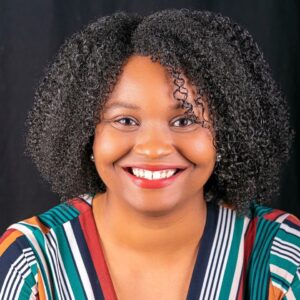
Corinne Hendrickson

Corinne Hendrickson’s responses:

What are you goals for your first term in office should you be elected?

Fully fund education and acknowledge it starts at birth (child care) and goes through secondary school. Public education has been a cornerstone of the United States and the only way to ensure everyone has access to opportunity and the career path of their choice.

Health care including reproductive rights, paid leave, and public option while we work at the federal level towards universal health care.

Second, we have got to overhaul campaign finance laws (I support Hawaii and Montana’s models) and also close the loophole for the state democratic and republican candidate committees ability to donate as much as they want to the candidate of their choice. Then pass and Independent Redistricting Commission so that we have it set up and active in time for the 2030 census. These are foundational to ensure the people choose their representatives instead of them choosing both their voters and who the candidates are.

Third, ensure we have a robust Joint Finance Committee listening sessions for the budget and we write a budget that works for the people and not the already powerful and wealthy.

Please describe your qualifications and what sets you apart from your fellow candidates.

I’m Corrine Hendrickson, a small business owner, educator, former New Glarus School Board member, wife of a volunteer fire chief (and full time firefighter), mom of two teenage boys, former child care provider and former Wisconsin Early Childhood Association Board President. I have been advocating for better policies and funding for children with special needs for over a decade, and for better policies to ensure small businesses can compete with larger ones.

I co-founded Wisconsin Early Childhood Action Needed to empower and engage Wisconsinites in the political process in 2020. We organized, held press conferences, offered trainings with elected representatives to learn about the budget process, legislative process, talk to committee members, and more. I have organized and built a community across the entire senate district and state. I have also worked with local, state, and federal representatives to write legislation, and testified at a US House Small Business Committee Hearing in February of 2023.

I was also a Cub scout Cubmaster taught children how to appreciate nature, fish, hike, camp, and become good stewards of our environment. My husband has been a volunteer firefighter for over two decades and I have seen how much harder it has gotten to recruit and retain as our rural communities have been hollowed out, small businesses are no longer robust in these communities, and people are commuting further or working more jobs just to get by and don’t have the capacity to volunteer. This will be the next crisis our communities face.

While UW-Madison is situated in Dane County, its role as an economic engine benefits the entire state. UW-Madison also has unique needs that are different from the other Universities of Wisconsin. Please tell us how you would represent UW-Madison in the Legislature and encourage your colleagues from outside Dane County to understand the statewide benefit of a strong UW-Madison.

The Wisconsin Idea and the UW Extensions are in every single county and impact/benefit every single person. We need to remember that. Furthermore, UW Platteville is in district and people of all ages within the district access classes and degrees online all throughout the state. For example, I did the Infant Early Childhood Family Mental Health Capstone online through UW Madison. I also just graduated from UW-Whitewater with my Masters in Education, Early Childhood Education Policy in December of 2025 and accessed the courses on-line. My oldest is a student at UW Madison currently pursuing Wildlife Ecology. Students from all over the state do internships, practicums, and more within the 17th. We have to remember that we are all interconnected and what impacts one impacts us all.

While the 2025-27 state budget included a substantial increase for UW System, UW-Madison is facing unprecedented cuts in federal funding – cuts totaling $200 million – while still recovering from a ten-year long tuition freeze and flat state budgets. Meanwhile, the other UW System institutions are facing an enrollment crisis. How would you address these concerns if elected?

We need to fund our UW system with more state dollars so that students can access your programs. I also would like to look at creating a public bank and part of that would be a state level student loan program for public state tech schools and universities, that would cap interest at 2%, instead of the predatory federal loans that make it impossible for too many to pursue higher education. The Badger Promise of free tuition for those with household incomes below $60,000 is a good start, but Minnesota goes up to $80,000 and I have talked to DPI and our reciprocity program is now tilted towards our students going to Minnesota as their in state tuition is less expensive AND we are not getting their students to come here as they don’t get the free college tuition. This is impacting our brain drain even more than it has been over the last few decades. Our public dollars have paid for those students education and we need to keep them here.

Wisconsin ranks near the bottom of state funding for four-year post-secondary education, while state funding for two-year technical education is among the best in the country. How would you address this disparity in the Legislature?

Same as above.

UW-Madison is the only university in the Big Ten without bonding authority, severely limiting the university’s ability to efficiently plan and complete much-needed building and renovation projects. Would you be an advocate among your colleagues to grant UW-Madison this essential tool?

Yes.

Shared governance has long played a role in how UW-Madison functions, in fact, shared governance was once enshrined in state statutes. Would you support legislation returning shared governance language to state statutes if introduced?

Yes.

Work on the 2027-29 state budget will begin shortly after legislators are sworn into office. What are your funding priorities?

Public education including universal child care, k-12, increase special ed reimbursement, and the UW system and tech colleges. Next is health care and ensuring our public health and health and human services are funded with state dollars to replace the federal cuts coming from 2025’s HR 1.

PROFS has long advocated for paid family leave for all employees and is pleased that UW-Madison and the Universities of Wisconsin implemented a modest six-week paid parental leave benefit two years ago. We believe this is just the first step and more needs to be done. Will you support initiatives like those offered by Governor Evers that would expand paid leave to state employees and create a paid leave insurance program for public and most private sector employees in the state?

Yes. I have been advocating for this for years with 9to5, Motherhood for Good, Main Street Alliance, WECAN, Family Friendly Wisconsin, and others at the state and federal level. I recently was in Washington D.C. and was shocked when Sen. Johnson’s office asked us about paid family leave advice and I asked them to look into how much it costs us because people don’t have paid leave and go on disability due to not healing appropriately from accidents or surgeries. Another increase in cost is that people put off knee surgeries and other surgeries until they can no longer function and it then causes multiple secondary problems costing more to fix and more complex surgeries because they don’t have access to paid leave OR return to work too soon for the same reasons.

17th Senate District Joanna Jacobson

Joanna Jacobson

Joanna Jacobson’s responses:

What are you goals for your first term in office should you be elected?

Everybody is feeling the pinch of rising costs of prescription drug prices, utilities, groceries, food, and gas. The people of the 17th and all across Wisconsin deserve someone who’s making sure that they’re not getting nickeled and dimed to death because the state refuses to look after families and Wisconsin workers. In addition to costs, I hear a lot about public school funding – which is another way we can help alleviate rising costs. Properly funding our schools will lower property taxes. Schools, like the rest of us, are facing budget pressures. Wisconsin must properly fund our schools so every child has access to a high-quality education.

Please describe your qualifications and what sets you apart from your fellow candidates.

I am the only candidate with a record of accomplishment on the Village Board and State Assembly. I’ve fought for middle class tax relief, more money for schools, and for more affordable and accessible healthcare. I know what it takes to stand up to the special interests because I’ve done that and I know what it takes to get stuff done and deliver real results for people who are counting on it.

While UW-Madison is situated in Dane County, its role as an economic engine benefits the entire state. UW-Madison also has unique needs that are different from the other Universities of Wisconsin. Please tell us how you would represent UW-Madison in the Legislature and encourage your colleagues from outside Dane County to understand the statewide benefit of a strong UW-Madison.

I believe that my Democratic colleagues truly understand the importance of a strong UW-Madison. Believe it or not, I also think some Republicans feel the same way too – they’d just rather exploit it politically for their own gain than admit it. As Senator, I look forward to partnering with UW Madison to be a strong ambassador for one of the economic engines of our State.

While the 2025-27 state budget included a substantial increase for UW System, UW-Madison is facing unprecedented cuts in federal funding – cuts totaling $200 million – while still recovering from a ten-year long tuition freeze and flat state budgets. Meanwhile, the other UW System institutions are facing an enrollment crisis. How would you address these concerns if elected?

During his time in office and as co-Chair of Joint Finance, Howard Marklein has been the chief architect behind the UW System’s struggles. He’s starved the System of much-needed funding, forcing campuses to close across the state and has intentionally politicized the System to exploit political gain. Rather than work as adversaries, as Senator, I’m eager to work as a partner with campuses in my district, like UW-Platteville, and across the State to restore UW to what it once was.

Wisconsin ranks near the bottom of state funding for four-year post-secondary education, while state funding for two-year technical education is among the best in the country. How would you address this disparity in the Legislature?

There’s no doubt that we need to fund higher education at a higher level. That said we need to be intentional about our plan to address this disparity and ensure that additional funding is going to the places that need it the most. Additionally, with a much more welcoming legislature, I would expect UW to engage us as partners in our overall mission to strengthen higher education here in Wisconsin.

UW-Madison is the only university in the Big Ten without bonding authority, severely limiting the university’s ability to efficiently plan and complete much-needed building and renovation projects. Would you be an advocate among your colleagues to grant UW-Madison this essential tool?

Yes.

Shared governance has long played a role in how UW-Madison functions, in fact, shared governance was once enshrined in state statutes. Would you support legislation returning shared governance language to state statutes if introduced?

Yes.

Work on the 2027-29 state budget will begin shortly after legislators are sworn into office. What are your funding priorities?

There are a number of priorities I would like to see in the next budget. For starters we need to address the economic pinch that working families are feeling all across Wisconsin – so whether that be by capping the cost of prescription drugs (like insulin and asthma medication), making housing more affordable by expanding the homestead tax credit, or investing in our public education to take the strain of property taxpayers, we need to do all we can to tackle this problem from all angles.

PROFS has long advocated for paid family leave for all employees and is pleased that UW-Madison and the Universities of Wisconsin implemented a modest six-week paid parental leave benefit two years ago. We believe this is just the first step and more needs to be done. Will you support initiatives like those offered by Governor Evers that would expand paid leave to state employees and create a paid leave insurance program for public and most private sector employees in the state?

Yes. I have been a supporter of paid family leave in the past and am eager for us to make headway on this issue in the majority.

17th Senate District candidate Lisa White

Lisa White

Lisa White’s responses:

What are you goals for your first term in office should you be elected?

My first‑term goals focus on making Wisconsin fairer, more affordable, and more democratic for everyday people.

I will work to revamp our public school funding model so state dollars go first to neighborhood public schools, not to vouchers, and to gradually phase out and ultimately end the school voucher program. I will fight to restore collective bargaining rights so workers have a real voice on the job and can secure fair wages, benefits, and working conditions.

Making life and homes more affordable is central to my agenda: I will push for policies that reduce the burden of property taxes, expand access to affordable housing, and protect families from being priced out of their communities. I will also support expanding Medicaid so more Wisconsinites can get the care they need without risking bankruptcy or going without treatment.

Finally, I will prioritize returning more local control over land‑use and environmental protections to our communities. People who live in a place should have a strong say in how their land, water, and natural resources are managed, and I will stand with them to protect our environment, rural heritage, and quality of life.

Please describe your qualifications and what sets you apart from your fellow candidates.

What sets me apart from the other candidates is the depth and breadth of my lived experience in the 17th Senate District. For more than 30 years, I have owned and operated a small business that serves communities across the entire footprint of this district, giving me a broader and deeper résumé than most political insiders and a practical understanding of what families, farmers, and small businesses face every day.

I have already been working across party lines to protect our communities—most recently by helping build support for a moratorium on the proposed Grant County data center. That effort shows I can bring people together, regardless of party, to stand up for local residents and our land instead of just accepting whatever outside interests put on the table.

Because I’ve conducted business and built relationships across party lines for decades, I know how to bridge the social and cultural divide that clearly exists from the western part of the district to the eastern part. My lifelong farm‑family background and being raised and educated in the western part of the district give me a grounded perspective and a new voice that Madison desperately needs. My expansive geographic presence and deep roots across the district make me uniquely positioned to build the coalition we need to defeat Howard Marklein and truly represent the 17th in the state senate.

While UW-Madison is situated in Dane County, its role as an economic engine benefits the entire state. UW-Madison also has unique needs that are different from the other Universities of Wisconsin. Please tell us how you would represent UW-Madison in the Legislature and encourage your colleagues from outside Dane County to understand the statewide benefit of a strong UW-Madison.

UW–Madison is one of Wisconsin’s greatest assets. While it is physically located in Dane County, its impact reaches every corner of our state through research, healthcare, agriculture, engineering, business development, and workforce training. The innovations developed at UW–Madison strengthen family farms, help small businesses grow, improve healthcare, and attract employers that create good-paying jobs across Wisconsin.

As a State Senator representing a largely rural district, I would make the case that investing in UW–Madison is an investment in every community—not just Madison. Whether it’s agricultural research that supports our farmers, partnerships with manufacturers, medical discoveries that improve lives, or educating the next generation of professionals, the university provides returns that benefit all Wisconsinites.

I also recognize that UW–Madison has unique needs as a world-class research university. To remain competitive nationally and internationally, it must be able to recruit and retain outstanding faculty and staff, support cutting-edge research, and provide students with an affordable, high-quality education.

I would work with colleagues from every region of Wisconsin by focusing on results rather than geography. Strong universities strengthen local economies, create new opportunities for businesses, and prepare the workforce our state depends on. Supporting UW–Madison is not about favoring one community over another—it is about investing in Wisconsin’s future, ensuring our state remains innovative, competitive, and economically strong for generations to come.

While the 2025-27 state budget included a substantial increase for UW System, UW-Madison is facing unprecedented cuts in federal funding – cuts totaling $200 million – while still recovering from a ten-year long tuition freeze and flat state budgets. Meanwhile, the other UW System institutions are facing an enrollment crisis. How would you address these concerns if elected?

UW–Madison is a true economic engine for our state, but it does not stand alone. As a legislator from the 17th Senate District, I will represent UW–Madison as our flagship research university while also championing UW–Platteville and the other Universities of Wisconsin as critical regional drivers of opportunity and growth.

I am deeply dismayed by recent cuts to research funding. Those dollars support discoveries in agriculture, engineering, health care, and technology that benefit communities far beyond Dane County. I will push the Legislature to restore and expand research support at UW–Madison, because strong research is how we attract federal funds, create high‑value jobs, and keep Wisconsin competitive—while also insisting that the benefits reach rural and small‑town Wisconsin.

At the same time, UW–Platteville is the university in my district, and I know firsthand how important it is as a regional anchor for engineering, agriculture, and the local workforce. I will encourage my colleagues to see the UW system as a network that must all be tended to: UW–Madison as a powerhouse for research and innovation, and campuses like Platteville as engines of local talent, rural development, and community vitality. My goal is a Legislature that restores research funding and strengthens UW–Madison, while enhancing the entire UW system, because our students, communities, and economy depend on both.

Wisconsin ranks near the bottom of state funding for four-year post-secondary education, while state funding for two-year technical education is among the best in the country. How would you address this disparity in the Legislature?

Wisconsin’s funding imbalance between four‑year universities and two‑year technical colleges is not sustainable if we want a strong, well‑educated workforce in every part of the state. The most important step is to modernize the state funding model for our public universities so it actually meets today’s needs.

In less than a generation, campuses like UW–Platteville have seen their state reimbursement fall from roughly 40 percent to somewhere around 17 percent. For a state university system, that is simply unacceptable. It forces campuses to rely heavily on tuition, fees, and constant belt‑tightening, which puts more burden on students and families and makes it harder to maintain high‑quality programs in engineering, agriculture, and other fields our rural and small‑town communities depend on.

In the Legislature, I would push to increase base funding for four‑year UW campuses, with particular attention to regional institutions like Platteville that serve rural areas and first‑generation students. At the same time, I would protect our strong support for technical education, which has proven its value for skilled trades and mid‑career training. Our goal should be a balanced, fair approach: keep technical colleges strong, while bringing four‑year university funding back up to a respectable level so students have real choices—whether they pursue a trade, a four‑year degree, or both over the course of their working lives.

UW-Madison is the only university in the Big Ten without bonding authority, severely limiting the university’s ability to efficiently plan and complete much-needed building and renovation projects. Would you be an advocate among your colleagues to grant UW-Madison this essential tool?

Bonding authority is really about who gets to make decisions and control the pace of university growth—and in Wisconsin, that power has been kept tightly in the hands of the state, not the campuses themselves. UW–Madison is the only university in the Big Ten that cannot issue its own bonds, which means every major building and renovation project has to wind through the state capital budget and political process, even when the money could be repaid from university revenues like housing, fees, or other income. That structure is rooted in a long‑standing tradition of state‑level control and, frankly, political gatekeeping: some legislative leaders want to retain direct veto power over big projects and are skeptical of UW–Madison’s priorities, and others are wary of public institutions taking on more debt, even when it is responsibly managed and essential for staying competitive.

The result is that UW–Madison loses time and money, falls behind peer institutions that can move quickly, and sees critical projects delayed or scaled back—not because campus leaders are incapable or uneducated, but because the state doesn’t fully trust them with the tools nearly all of their peers already have. To people on campus and many in the public, that absolutely feels insulting and short‑sighted. It suggests that those closest to the educational mission and the students cannot be trusted to plan and finance the facilities they need, even as those delays hurt Wisconsin’s students, research capacity, and economy.

My answer is: yes, I would advocate among my colleagues to grant UW–Madison bonding authority. Withholding this tool is not about competence; it is about political control, and it is costing Wisconsin dearly. I would make the case that responsible bonding authority is a practical way to let UW–Madison plan and build efficiently—while still maintaining transparency and oversight—and that trusting our flagship and our other campuses with modern financing tools is part of treating higher education as the statewide economic engine it truly is.

Shared governance has long played a role in how UW-Madison functions, in fact, shared governance was once enshrined in state statutes. Would you support legislation returning shared governance language to state statutes if introduced?

Yes. I would support legislation returning shared governance language to state statutes if it is introduced.

Shared governance at UW–Madison means that faculty, academic staff, university staff, and students all have a real voice in major decisions about how the university operates. It is a long‑standing Wisconsin tradition that the people most affected by decisions—those who teach, study, and work on campus—help shape those decisions, instead of everything being handed down from the top with little input. When shared governance language was removed from state law, it weakened that guarantee and sent the wrong message about whose voices matter in higher education.

As a legislator, I believe our public universities work best when they are accountable to their communities and when decision‑making is collaborative and transparent. Restoring shared governance to statute would reaffirm that Wisconsin values the expertise and lived experience of faculty, staff, and students, and that we trust them to be partners in shaping the future of UW–Madison and the broader UW System. I would encourage my colleagues to see shared governance not as a threat to oversight, but as a practical tool for better decisions—ones that reflect the needs of students and workers and strengthen the university’s ability to serve the entire state.

Work on the 2027-29 state budget will begin shortly after legislators are sworn into office. What are your funding priorities?

My funding priorities for the 2027–29 state budget center on three core commitments: fully funded education at every level, real support for women, children, and caregivers, and protecting the land and environment that make life and housing affordable.

My top priority is to strengthen public education—from early childhood through technical colleges and four‑year universities. That means increasing state support for K‑12 public schools so we can reduce over‑reliance on property taxes and phase out vouchers that drain resources from neighborhood schools; investing in child care, early education, and special education so families are not forced to choose between work and their children’s well‑being; and restoring fair funding for UW campuses and technical colleges, especially regional institutions like UW–Platteville that serve rural communities and first‑generation students.

Too many recent cuts and policy choices have fallen hardest on women and children, and for generations our culture has relied on the unpaid and underpaid labor of women to solve problems, provide care, and hold families and communities together. In the budget, I will prioritize affordable child care, strong maternal and child health services, and support for caregivers and women‑dominated professions. Finally, I will prioritize protecting the “very earth under our feet”—our soil, water, and land—by safeguarding clean air and water, supporting sustainable agriculture, and funding policies that make housing more affordable by aligning land‑use, infrastructure, and environmental protection.

PROFS has long advocated for paid family leave for all employees and is pleased that UW-Madison and the Universities of Wisconsin implemented a modest six-week paid parental leave benefit two years ago. We believe this is just the first step and more needs to be done. Will you support initiatives like those offered by Governor Evers that would expand paid leave to state employees and create a paid leave insurance program for public and most private sector employees in the state?

Yes. I will support expanding paid leave for state employees and creating a paid leave insurance program that covers most workers in Wisconsin.

Paid family and medical leave is essential if we want our economy and our families to be healthy and stable. A modest six‑week paid parental leave benefit at UW–Madison and across the Universities of Wisconsin was an important first step, but it is not enough. Too many parents, caregivers, and people facing serious health issues are still forced to choose between a paycheck and their own or their family’s well‑being. That is wrong, and it falls especially hard on women, low‑wage workers, and rural families who have fewer backup options.

I will support initiatives like those offered by Governor Evers to expand paid leave for state employees and to create a paid leave insurance program that covers public and most private sector workers in Wisconsin. A well‑designed paid leave insurance system spreads the costs broadly while ensuring that individual employers are not crushed by the expense of doing the right thing. It keeps people attached to the workforce, reduces turnover, and helps businesses keep experienced employees. Most importantly, it recognizes caregiving, parenting, and healing as real work that deserves real support—not unpaid labor that families are expected to shoulder alone.

For me, expanding paid leave is part of a larger effort to make Wisconsin more affordable and humane for the people doing the hard work of raising children, caring for loved ones, and keeping our communities going.
PROFS Candidate Questionnaires

As a result of new legislative district maps, many more Senate and Assembly contests are competitive this year. Coupled with a large number of Republican retirements, the 2027 Legislature will look substantially different when it convenes in January.

PROFS reached out to Democratic candidates who are on the primary ballot (August 11) in two local districts, Assembly District 76 (east Madison) and Senate District 17 (southwestern Wisconsin, including western Dane County). None of these districts have a Republican primary. Their responses follow this post.

December Legislative Update

The update below was shared with senators and guests at the Faculty Senate meeting yesterday. The Senate meets in Room 272 Bascom Hall at 3:30 pm on the first Monday of the month, October-December and February-May.

Loader Loading...
EAD Logo Taking too long?

Reload Reload document
| Open Open in new tab

Election Update from PROFS

Last week, Michael Bernard Donals, President of PROFS, and Jack O’Meara, PROFS’ lobbyist, sent an email to all faculty with an update on the federal and state elections. The text of that message is below:

Hello UW-Madison Faculty Member:

With the election a few days behind us, we wanted to get in touch to summarize what happened and where we see things going in the days and months ahead. We particularly want to make sure you are aware of the results in the state legislative elections.

On Election Night, Wisconsin–long a battleground state–gave former President Donald Trump the electoral college votes he needed to declare victory. Trump won the state by roughly 30,000 votes.

We can expect major changes in higher education policy under President Trump. Here are some articles on that topic:

Democratic U.S. Senator Tammy Baldwin won a close election, defeating her opponent, Eric Hovde, by about 29,000 votes for a third term in the Senate. Our longtime local congressman, Democrat Mark Pocan, was also re-elected. PROFS has strong relationships with Senator Baldwin and Congressman Pocan, dating to their times in the Wisconsin Legislature, and we look forward to working with them and their staffs in 2025.

Because of Democratic losses in other states, control of the U.S. Senate will shift to the Republicans. Control of the U.S. House of Representatives has yet to be determined, as many races, particularly on the West Coast, have not been called. This will be a significant factor in whether President Trump will be able to fully advance his agenda.

The balance of power in the Wisconsin Legislature will be much closer in January following a lawsuit over gerrymandering that resulted in new, more competitive legislative maps. Democrats, however, were not able to take control of the State Assembly, as they had hoped. Given that only half the Senate is up for election every two years, it was not realistic for the Democrats to take back the Senate, but it is noteworthy that the Democrats won all of the most competitive races on the Senate side.

Democrats picked up 10 seats in the State Assembly and four seats in the State Senate. This means there will be 54 Republicans and 45 Democrats in the Assembly, and 18 Republicans and 15 Democrats in the Senate. In the previous legislative session, the balance was 64-35 and 22-11, meaning the Republicans had a supermajority in the Senate and a near-supermajority in the Assembly. Legislators can override vetoes from Democratic Governor Tony Evers with supermajorities.

Some of the notable new faces in the Legislature include Democratic Representative-elect Renuka Mayadev, who will serve in the newly-created district that represents UW-Madison and many areas where UW employees live. Rep.-elect Mayadev currently works at the UW School of Medicine and Public Health. Also of note, Democratic Senator-elect Jamie Wall, a business consultant in Green Bay, was a Rhodes Scholar after receiving his bachelor’s degree from UW-Madison. Senator Kelda Helen Roys (D-Madison), a strong advocate for the faculty and UW-Madison, was also re-elected.

Legislators are beginning to elect their leadership. Senator Mary Felzkowski (R-Tomahawk) was elected by her caucus to serve as Senate President. Senator Felzkowski is a long-time member of the Joint Finance Committee. Senate Majority Leader Devin LeMahieu (R-Oostburg) will continue to serve as leader. More leadership votes will take place next week, and committee memberships will be announced in the coming weeks.

The 2025-27 state budget, including funding for UW-Madison and the Universities of Wisconsin, will be at the top of the agenda for the new Legislature when they take office in January. Following the recommendation of UW System President Jay Rothman, the UW Board of Regents has requested $855 million in new funding for the universities.

Last week, the Legislative Council Study Committee on the Future of the UW System endorsed the idea of a separate board and separate funding for UW-Madison, along with bonding authority for the university, plus other suggestions. PROFS will monitor developments and advocate for the best possible result for UW-Madison and its faculty.

As always, let us know if you have concerns, suggestions, or questions.

Sincerely,

Michael Bernard-Donals, English & Jewish Studies
PROFS President

Jack O’Meara
PROFS Lobbyist

Voting Information for Students

PROFS shared the message and slides below with its membership earlier this week. We encourage all faculty to take a few minutes in class to ensure students have accurate information about the process and requirements to vote in Wisconsin.

Loader Loading...
EAD Logo Taking too long?

Reload Reload document
| Open Open in new tab

Senate District 16 Responses

Jimmy Anderson, Samba Baldeh, and Melissa Ratcliff, all State Representatives in the 16th Senate District, are running in the Democratic primary. Incumbent State Senator Melissa Agard chose not to run for reelection and is a candidate for Dane County Executive in 2025. The newly-drawn district includes Fitchburg, eastern Dane County, and parts of Dodge County and Jefferson County. There is no Republican running for the seat, so the primary winner is almost certain to win in November. Baldeh did not respond to our request.

Jimmy Anderson

Jimmy Anderson’s responses:

What are your goals for your first/next term in office should you be elected?

If I am elected, I will prioritize making our healthcare system more accessible, affordable, and responsive for all Wisconsinites, including people with disabilities. That means expanding Medicaid in Wisconsin, capping healthcare costs for the uninsured, preventing insurance companies from raising rates without just cause, lowering the prices of prescription drugs, and giving patients more resources to advocate for themselves. I will also continue championing legislation to fully fund our public education system, from pre-k through college: increasing the state special education reimbursement rate from 33 to 90%, boosting aid to childcare providers, stemming the flow of taxpayer dollars into the unaccountable voucher system, and supplying state funding higher education more affordable – including need-based financial aid and student loan forgiveness. Overturning Act 10 will be instrumental to ensuring that every worker, public or private, has the right to a strong union and collective bargaining, a living wage and decent benefits, a safe and healthy workplace, and self-determination for themselves and their families. We must protect our environment and combat climate change. We must overturn the archaic 1849 abortion ban and enshrine reproductive rights into our state Constitution. Finally, Wisconsin’s affordable housing crisis must be addressed: I will continue fighting for policies that incentivize building more affordable housing, expanding assistance programs such as the Homestead Tax Credit, and reintroduce my Tenant Protection Package, which prohibits housing discrimination against immigrants, provides grants for tenants’ legal representation, codifies compensation for uninhabitable conditions, and guarantees tenants’ right to organize.

Please describe your qualifications and what sets you apart from your fellow candidates.

I grew up the son of a union truck driver and a Mexican immigrant and became the first in my family to go to college. During law school, a drunk driver took the lives of my mother, father, and little brother, and left me paralyzed. In the aftermath of that accident, the Affordable Care Act saved my life, allowing me to afford rehabilitation. I realized first-hand the importance of compassionate policy, which provides grace in the moments when we are hurting the most – and the grave consequences of accepting a system that forces us to make impossible sacrifices. My experience inspired me to run for office and fix what was broken in our system. I was elected in 2016 and have served in the State Assembly for the last eight years, focusing on issues around healthcare, environmental protection, school funding, and disability access. My state legislative experience, which is more than both of my opponents’ combined, has prepared me to be effective on day one. If Democrats only have a slim or brief majority, experience and trusted relationships will be essential to making our progressive vision for Wisconsin a reality. Secondly, I believe strongly in the ideals of a representative democracy. No one else in the legislature looks like me, despite about 20% of our state having some form of disability. My voice is needed in the capitol because my lived experiences give me special insight into how legislation might unintentionally impact or harm the disabled community.

While UW-Madison is situated in Dane County, its role as an economic engine it benefits the entire state. UW-Madison also has unique needs that are different from the other Universities of Wisconsin. Please tell us how you would represent UW-Madison in the Legislature and encourage your colleagues from outside Dane County to understand the statewide benefit of a strong UW-Madison?

Over the eight years I have served on the Assembly’s Colleges & Universities Committee, I have consistently advocated for fully funding our university system. Well-funded universities provide immense benefits to everyone in Wisconsin, from training our future workforce to making our state a better place to raise a family. In fact, every dollar invested in the UW system creates a $23 return for the state. Therefore, making higher education more affordable and accessible for everyone, regardless of means, race, religion, gender identity, sexual orientation, and disability status, will continue to be a major focus of mine in the State Senate. As a proud graduate of UW-Madison’s law school, I agree that our flagship university occupies a special place in the UW system, given its ability to draw students from across the country and world, its world-renowned faculty, programs, and the incredible world-changing research it produces. If elected, I will do everything in my power to maintain – and expand – UW-Madison’s resources so it can continue to operate as a beacon of innovation, opportunity, and learning for all.

State funding for higher education has fallen dramatically over the past several decades, resulting in a dependence on tuition and fundraising to replace decreased state support. A ten-year long tuition freeze coupled with previous state budget cuts has forced UW-Madison to make serious cuts, while other UW System campuses face devastating budget shortfalls. How would you address these concerns if elected?

Republicans’ recent cuts to the UW system’s budget – as well as their efforts to make university funding conditional upon universities’ adherence to a regressive and inflexible ideological program – are simply unconscionable. We can no longer be a state that funds our prison system more than we fund our universities. If I am elected to the State Senate, I will work hard to ensure that the state fully reinvests in the UW system, including the Wisconsin Grants and Tuition Promise initiatives. I fully support the legislative Democrats’ “Reaching for Higher Ed” package, and will continue to champion it if I am elected to the State Senate. Although providing more state funding will help reduce the need for future students to take on loans, we must also do more to provide relief for the over 700,000 graduates who are struggling to pay off pre-existing student loan debt. I would also support legislation to allow borrowers to refinance their loans at lower interest rates and deduct student loan payments from state income taxes.

The current legislative majorities have worked to delegitimize diversity, equity, and inclusion (DEI) efforts. Legislators have forced the university to reclassify DEI positions and a legislative audit of UW DEI programs is underway. UW-Madison as an institution understands diversity to be a value that is inextricable from its other values, including educational and research excellence. Tell us about your legislative priorities on diversity, racial justice, and their relation to the values you hold related to higher education.

The importance of DEI to the wellbeing of UW’s student body is undeniable and I will actively work to safeguard and empower these initiatives if I am elected to the State Senate. During the state budget process last year, legislative Republicans cut UW funding by $32 million and attempted to eliminate the university system’s 188 Diversity, Equity, and Inclusion positions. Directly targeting programs designed to support minority students not only contributes to a long-found pattern of exclusion, it also dampens opportunities for all students to succeed. According to UW-Madison’s Diversity Inventory report, the Republican budget cut for DEI services has managed to decrease the target population for DEI initiative change from 65,584 in 2022 to just 1,335 in a single year. We must safeguard DEI programs from such cuts in the future and make sure that our universities are not only authorized, but encouraged, to proactively support underrepresented student populations. As a disabled, Latino man, I have greatly benefited from DEI programs and fully understand how they help individuals from all backgrounds climb up the economic ladder. If I am elected to the State Senate, I promise to restore what’s been lost and prevent Republicans from dismantling these incredibly important programs.

Wisconsin ranks near the bottom of state funding for four-year post-secondary education, while state funding for two-year technical education is among the best in the country. How would you address this disparity in the Legislature?

As a state, we absolutely have the resources to eliminate this inequity without sacrificing state support for technical colleges and vocational programs. I fully supported Governor Evers’ proposal to allocate $306 million in state funding to the UW System in the last state budget, and I will support similar investments in the future. If we want to increase enrollment, attract and retain talented students, staff, and faculty, and empower UW-Madison to compete with other top-tier universities across the country, we have to make the same investments in our four-year campuses as we have made in our technical college system.

Work on the 2025-27 state budget will begin shortly after legislators are sworn into office. What are your funding priorities?

My top budget priority if elected to the State Senate will be public school funding, from childcare and pre-k all the way through to higher education. Wisconsin must uphold its responsibility to fully fund our public schools to provide all students with an equal opportunity to learn and grow. However, our current school funding formula is outdated and broken. Communities are forced to go to referendum over and over again just to keep the doors of their public schools open, all while the state sits on a multi-billion dollar surplus. We must use our resources to invest in our public education system and stop expanding funding to voucher programs that only shortchange public schools while deepening inequities. In addition to school funding, I will prioritize investments in affordable housing, cleaning up PFAS in our water systems, supporting our colleges and universities, increasing eligibility for the Earned Income Tax Credit and Homestead Tax Credit, expanding Medicaid, and reducing costs of living for lower and middle class families.

PROFS has long advocated for paid family leave for all employees and is pleased that UW-Madison and the Universities of Wisconsin recently approved a modest six-week paid parental leave benefit. We believe this is just the first step and more needs to be done. Will you support initiatives like those offered by Governor Evers that would expand paid leave to state employees and create a paid leave insurance program for public and most private sector employees in the state?

All Wisconsin workers deserve to know that they can take time away from work to care for a child or support an ill family member without losing pay or access to benefits. I fully support Governor Evers’ proposal to guarantee public and private sector workers 12 weeks of paid family and medical leave. I believe that we can best serve our communities and our economy by enacting policies that treat workers like human beings, and enacting universal paid family & medical leave is a paramount example of that worldview.

Melissa Ratcliff

Melissa Ratcliff’s responses:

What are your goals for your first/next term in office should you be elected?

Statewide, we should repeal the 1849 law criminalizing abortion as our first act in the new legislature. For the people I will represent in Senate District 16, better access to high-speed internet is a key issue. Lack of broadband affects education, business, our farmers, and access to health care. District residents are also affected by the lack and cost of childcare.

Please describe your qualifications and what sets you apart from your fellow candidates.

My background and experience are the best fit for new Senate District 16. I am a working mom who understands residents’ concerns. I will bring my proven track record of getting results, fighting for our shared values, and working tirelessly for the communities I serve to the State Senate. I have lived in small towns and rural communities like those in District 16. My experience in the State Assembly, on the Village Board and County Board gives me a unique perspective. With new maps, we need leaders who will help change the face of the Senate in years to come. I have earned the endorsement of more than 100 current and former elected leaders throughout the district including former Dane County Executive Kathleen Falk, Former Fitchburg Mayor Frances Huntley-Cooper, Jefferson County Board Chair Steve Nass and Stoughton Mayor Tim Swadley. My priorities include ensuring access to abortion, supporting public schools, protecting the environment, expanding health care, increasing access to broadband, support for LGBTQIA+ communities, and supporting the needs of rural communities.

While UW-Madison is situated in Dane County, its role as an economic engine it benefits the entire state. UW-Madison also has unique needs that are different from the other Universities of Wisconsin. Please tell us how you would represent UW-Madison in the Legislature and encourage your colleagues from outside Dane County to understand the statewide benefit of a strong UW-Madison?

In the Assembly, I have been a vocal supporter of UW-Madison and have pushed back hard on efforts to eliminate and undermine DEI. Many of my colleagues, unfortunately, simply try to score political points by disparaging Dane County and Madison. With fair maps in place, after decades of being one of the most gerrymandered states in the Country, we have the opportunity to change the make-up of the legislature. I have worked tirelessly ever since I was in public life to elect Democrats up and down the ticket. I will continue to do so. We need a majority in the legislature in order to truly make progress on the issues that Wisconsinites overwhelmingly support but which are bottled up in partisan gamesmanship.

State funding for higher education has fallen dramatically over the past several decades, resulting in a dependence on tuition and fundraising to replace decreased state support. A ten-year long tuition freeze coupled with previous state budget cuts has forced UW-Madison to make serious cuts, while other UW System campuses face devastating budget shortfalls. How would you address these concerns if elected?

The UW System needs more funding from the legislature and less meddling. I have supported measures to increase funding to the UW system and I have coauthored bills to make the University more affordable for students such as AB 990 which would have created a grant program to close the gap between any scholarships or grants that an eligible student received outside of this program and the full cost of tuition and fees. The University of Wisconsin system is an economic generator for our state. We need to invest in our UW system in order to support more students to come here and stay here. For every $1 we invest in the UW System, we get a $27 return on our dollar. That makes smart sense fiscally. Cutting funding for a program that earns a $27 return? That doesn’t make sense. We need the brain trust in our state to stay here to contribute to our economy and we want younger people to stay here, raise their families, and be a part of Wisconsin’s economy.

The current legislative majorities have worked to delegitimize diversity, equity, and inclusion (DEI) efforts. Legislators have forced the university to reclassify DEI positions and a legislative audit of UW DEI programs is underway. UW-Madison as an institution understands diversity to be a value that is inextricable from its other values, including educational and research excellence. Tell us about your legislative priorities on diversity, racial justice, and their relation to the values you hold related to higher education.

I will continue to prioritize DEI in the Senate just as I did in the Assembly. I personally communicated my opposition to System officials when DEI positions were about to be cut. I understand the value of DEI positions and know how important it is to have DEI as part of the vision/mission statement: that makes equity and inclusion part of the culture of the school. When DEI is removed, the culture of the campus changes because students and staff know that is no longer a focus. I strongly opposed AB 245 which contained poison pills that would have banned using local tax dollars for DEI initiatives. As the mother of a transgender child, I cofounded the legislative Transgender Parent and Non-Binary Advocacy Caucus both to advocate for transgender and non-binary youth and community, and to be active in opposing anti-trans legislation which targeted trans and non-binary youth, equity, inclusion and diversity.

Wisconsin ranks near the bottom of state funding for four-year post-secondary education, while state funding for two-year technical education is among the best in the country. How would you address this disparity in the Legislature?

The University of Wisconsin is one of the state’s biggest assets. It is a critically important economic driver in our State and one of the nation’s premiere public Universities. We should be working together to make the System healthier and stronger. The legislature needs to increase support for the UW System. Legislators need to work with UW Leadership to help identify and enact innovative and proactive ways to increase enrollment. Legislative leadership should stop bashing the UW, stop meddling, and invest more in the System.

Work on the 2025-27 state budget will begin shortly after legislators are sworn into office. What are your funding priorities?

Fund our public schools, including our public universities. Expand access to health care. Prioritize family-supporting policies including investing in safe, affordable childcare. Continue funding for expansion of broadband. Invest in conservation and sustainability initiatives.

PROFS has long advocated for paid family leave for all employees and is pleased that UW-Madison and the Universities of Wisconsin recently approved a modest six-week paid parental leave benefit. We believe this is just the first step and more needs to be done. Will you support initiatives like those offered by Governor Evers that would expand paid leave to state employees and create a paid leave insurance program for public and most private sector employees in the state?

Yes! I strongly support expanding paid leave to state employees and increasing access to it for public and private sector workers. I have been a strong advocate for Paid Family Leave for years. It will allow people to care for their families or themselves without concern for the loss of a job. It also helps small employers attract and compete with the benefits that larger employers can provide.

Assembly District 80 Responses

Incumbent Mike Bare and challenger Nasra Wehelie are running in Assembly District 80 Democratic primary. The district now includes portions of the far west and southwest sides of Madison, Cross Plains, the Town of Middleton, and Verona.

Mike Bare

Mike Bare’s responses:

What are your goals for your first/next term in office should you be elected?

A lot obviously depends on whether Democrats get into the majority in the Assembly or not. Either way, I will continue to champion economic security issues. And regardless of the balance of the chamber, we, as a team, need to defend our democracy, restore our rights, and make investments in our community. Those investments must include UW.

Please describe your qualifications and what sets you apart from your fellow candidates.

At a time when our government is dysfunctional, I have a long list of accomplishments and familiarity with how the Legislature and our policies work. I’m a public servant, small business owner, anti-poverty advocate, and father. I’m relentless about making progress on our challenges. I’m guided by Progressive values in everything I do. I’ve served in City and County government; advocated at the local, state, and federal level; and I worked for U.S. Senator Russ Feingold. My priorities reflect concerns I hear from voters in our community about our democracy and right to vote; our schools, environment, and other basic rights like health care and abortion access, Internet access, and housing.

While UW-Madison is situated in Dane County, its role as an economic engine it benefits the entire state. UW-Madison also has unique needs that are different from the other Universities of Wisconsin. Please tell us how you would represent UW-Madison in the Legislature and encourage your colleagues from outside Dane County to understand the statewide benefit of a strong UW-Madison?

I have made this case countless times to my colleagues across the aisle. I recently toured a laboratory expansion at ThermoFisher in my Assembly district and they said they hire between 400 and 600 UW grads every year. That is a major global employer who could go anywhere investing here because we have the talent they are looking for. We can’t lose out on those opportunities for well-paying jobs. In this case, it is well-paying jobs that are working to save lives. I have always been available and met with UW’s leaders, faculty, staff, and advocates, alumni advocates, and students. I’ll continue to be available to them, and represent them with my full attention and support.

State funding for higher education has fallen dramatically over the past several decades, resulting in a dependence on tuition and fundraising to replace decreased state support. A ten-year long tuition freeze coupled with previous state budget cuts has forced UW-Madison to make serious cuts, while other UW System campuses face devastating budget shortfalls. How would you address these concerns if elected?

I support the Governor’s upcoming budget proposal to invest more than $800 in the Universities of Wisconsin, which will be the largest investment in higher ed in state history. UW-Madison and the UW System campuses should not have to do layoffs or consider shutting down. Not when we’re sitting on a $3 billion state budget surplus.

The current legislative majorities have worked to delegitimize diversity, equity, and inclusion (DEI) efforts. Legislators have forced the university to reclassify DEI positions and a legislative audit of UW DEI programs is underway. UW-Madison as an institution understands diversity to be a value that is inextricable from its other values, including educational and research excellence. Tell us about your legislative priorities on diversity, racial justice, and their relation to the values you hold related to higher education.

Republicans are kicking UW while it’s down to score political points—and they’re doing it on the backs of students, staff, and faculty who instead need an open hand, an equal chance at a higher education and employment, and an equitable share of the benefits our tax dollars provide to students and higher education workers.

I’ve talked to hundreds of UW employees at their doors in the 80th Assembly District, which is near UW-Madison. They resent being political pawns and having their raises used as leverage against DEI.
My wife teaches at UW Law School as part of her job as a public defender. And I have previously been a Lecturer teaching graduate level courses on public health policy at the Zilber School at UW-Milwaukee. The poor compensation and lack of resources available to both of us and to our students is stunning. We can attest that these world-class research institutions are a top driver of Wisconsin’s statewide economy. And all of the Universities of Wisconsin campuses are local and regional economic powerhouses that grow communities, help workers, and create pride in one’s community. They should not be political footballs. We must ensure that “The Wisconsin Idea” remains a Wisconsin institution.

Unfortunately, anything promoting DEI is DOA with Republicans in the Legislature. Their bullshit talking points and reprehensible appeasement of the elitist white supremacists who dismantled affirmative action and want to go further set us all back in deeply harmful ways that ripple through generations and echo the inhumanity of a past we should leave behind.

Ideally, new maps will force the Republicans in the Legislature to be more reasonable on this. Democrats and Governor Evers also need to identify and use what leverage we have in the next state budget.
Republicans purposefully withheld funding for building projects and raises at UW as leverage to kill DEI programming. The Board of Regents voted to accept their offer against the request of Legislative Democrats including me. The Governor should only appoint Regents who are 100% committed to restoring and maintaining DEI programs, continuing the great tradition of The Wisconsin Idea, and who are willing to stand up to political stunts.

Wisconsin ranks near the bottom of state funding for four-year post-secondary education, while state funding for two-year technical education is among the best in the country. How would you address this disparity in the Legislature?

As Wisconsin continues to evolve from an economy based in manufacturing and agriculture into more advanced technical and non-traditional workplaces, we need our already strong UW to remain strong. That starts with funding.

Students need more help affording the cost of classes, textbooks and classroom materials, and we should provide even more assistance with debt and expand the College Grants program that provides need-based financial aid, and expand Bucky’s Tuition Promise. I support the Governor’s upcoming proposed budget that invests heavily in UW. We must keep investing in UW.

Work on the 2025-27 state budget will begin shortly after legislators are sworn into office. What are your funding priorities?

We must protect our democracy, restore our rights, and invest in our communities. Republicans have been far too successful in attacking our democracy by questioning election results and degrading voters’ confidence in government institutions and public education. We must win back this narrative and advocate for pro-democracy policies like ballot drop boxes, automatic voter registration,

Too many of our rights—voting, collective bargaining, reproductive health choice, trans and LGBTQ+ rights, and our freedom to assemble free from fear of gun violence—have been taken away or eroded in recent years.

And we must make investments in our communities, including strong public K-12 schools and higher education. My mom was a public high school English teacher and I’ve known all my life the value of a good public education at every level. Our public schools are the bedrock of our communities.
Other needed investments include workforce housing, transit options, childcare, Medicaid expansion, and environmental protections.

I have spent the most time in the Assembly working on legislation to help working people. I introduced bills to expand the Earned Income Tax Credit (AB471), expand the Homestead Credit (AB458), and create WISEARNS (a state-facilitated retirement savings program for workers whose employers don’t provide it). I will also work on a bill to create a state supplement to the federal Child Tax Credit (though that requires federal action first that has stalled in this session of Congress). This kind of targeted tax relief incentivizes work, makes work pay, and makes more work available. It helps families get by and plan for the future. And we have a state budget surplus that could easily fund these priorities and put more money in workers’ pockets. And while the following are both statewide issues, it’s especially essential for the 80th Assembly district (Verona, Far West Side and Southwest Corner of Madison, Middleton, and Cross Plains) that we provide more funding for starter housing and workforce housing, and the re-establishment of a Regional Transit Authority (RTA). State and local investments in housing and transit infrastructure create and sustain union jobs. And the communities of the 80th Assembly District struggle with both at a magnitude rarely matched across the state due to explosive population growth and density where getting from point A to point B is only possible on roads designed to support a few farms. Each priority requires respected public workers with rights and good compensation.

Each of those issues is a budget priority. We must make electoral gains with the new legislative maps and in Congress and the U.S. Senate to do these things. That takes work I’m deeply committed to doing.

PROFS has long advocated for paid family leave for all employees and is pleased that UW-Madison and the Universities of Wisconsin recently approved a modest six-week paid parental leave benefit. We believe this is just the first step and more needs to be done. Will you support initiatives like those offered by Governor Evers that would expand paid leave to state employees and create a paid leave insurance program for public and most private sector employees in the state?

Yes I have supported these expansions and will continue to do so. The time I was able to take off of my previous nonprofit job when both of my boys were born was some of the most fulfilling time of my life. We are far behind other advanced economies around the world in guaranteeing this benefit.

Nasra Wehelie

Nasra Wehelie’s responses:

What are your goals for your first/next term in office should you be elected?

As a current Alder on the Madison Common Council, UW alum (Go Badgers!), and a Democratic candidate running in the new Assembly District 80, I am deeply committed to serving our community. You can learn more on my website nasraforwi.com. My goals for the first term in office are focused on three key policy areas: attainable housing, women’s rights, and economic stability. I will advocate for equitable housing development, inclusionary zoning, and financial incentives to ensure everyone can access safe, stable, affordable homes. Supporting policies that enhance reproductive rights, healthcare access, and affordable childcare is crucial for advancing women’s rights. To boost economic stability, I will promote small business growth, job creation, and access to capital, with targeted support for minority and women-owned businesses. Additionally, I will advocate for legislation allowing municipalities to implement a local sales tax, ensuring the revised shared revenue formula addresses disparities and provides equitable funding to cities like Madison, which have unique needs and responsibilities. These priorities are vital for fostering a thriving, inclusive community that supports all its members.

Please describe your qualifications and what sets you apart from your fellow candidates.

My journey into politics has been driven by a passion for creating positive change and a belief in the power of effective leadership. Throughout my career, I have worked tirelessly to advocate for the issues most important to us. With more than 20 years of service in the community, nonprofit organizations, and local government, I have been guided by the belief that positive change starts at the community level. I have witnessed the power of empathy and collaboration and the impact we can make on our communities together.

What sets me apart is my commitment to addressing the diversity gap within our Wisconsin State Legislature, which does not reflect the diversity of Wisconsin’s population and the voices of minority communities. Only 30% of women serve in our Capitol, and Wisconsin continues to rank as the worst state in America for black residents. We can make significant steps forward by supporting diverse candidates who will analyze legislation with a critical lens. I am dedicated to working for all Wisconsinites, ensuring that every voice is heard and represented.

While UW-Madison is situated in Dane County, its role as an economic engine it benefits the entire state. UW-Madison also has unique needs that are different from the other Universities of Wisconsin. Please tell us how you would represent UW-Madison in the Legislature and encourage your colleagues from outside Dane County to understand the statewide benefit of a strong UW-Madison?

As a UW alum, I am committed to ensuring that UW-Madison remains a world-class institution. It contributes significantly to the state’s economy, generating over $15 billion annually and supporting more than 193,000 jobs statewide. Highlighting these economic contributions, I will showcase the university’s role in driving innovation, attracting businesses, and fostering a skilled workforce. Promoting collaboration between UW-Madison and other universities, industries, and communities across the state will be a priority.

Advocating for infrastructure improvements will also be crucial to maintaining UW-Madison’s status as a leading institution, ensuring that facilities and resources meet the needs of students, faculty, and researchers. For instance, the university receives over $1.2 billion in research funding annually, making it a key player in national and global innovation. I will engage with legislators from outside Dane County to help them understand the statewide benefits of a strong UW-Madison, emphasizing the university’s role in fostering economic development and improving the quality of life for all Wisconsinites.

State funding for higher education has fallen dramatically over the past several decades, resulting in a dependence on tuition and fundraising to replace decreased state support. A ten-year long tuition freeze coupled with previous state budget cuts has forced UW-Madison to make serious cuts, while other UW System campuses face devastating budget shortfalls. How would you address these concerns if elected?

The significant decline in state funding for higher education—over 30% in the last two decades—has led to a reliance on tuition and fundraising. This issue is worsened by a decade-long tuition freeze and previous state budget cuts, forcing UW-Madison and other UW System campuses to make severe financial compromises. If elected, I will work to restore sustainable state funding and support the UW System to ensure it can continue to provide high-quality education and research opportunities.

Addressing these funding challenges requires a multifaceted approach: restoring state funding, revisiting tuition policies, expanding financial aid, fostering public-private partnerships, improving operational efficiency, and increasing public awareness about the importance of higher education funding.

As a UW alum, your representative, and a parent of four UW alumni, I am deeply committed to championing these initiatives!

The current legislative majorities have worked to delegitimize diversity, equity, and inclusion (DEI) efforts. Legislators have forced the university to reclassify DEI positions and a legislative audit of UW DEI programs is underway. UW-Madison as an institution understands diversity to be a value that is inextricable from its other values, including educational and research excellence. Tell us about your legislative priorities on diversity, racial justice, and their relation to the values you hold related to higher education.

My legislative priorities are grounded in the belief that diversity and racial justice are essential for a thriving educational system. We can create a more just and equitable UW System by promoting policies that expand access, enhance diversity among faculty and staff, develop inclusive curricula, support student success, and address systemic inequities. Ensuring that higher education is accessible and affordable for all students, particularly those from historically underrepresented and marginalized communities, is paramount.

This commitment benefits individual students, supports the entire academic community, and prepares all students to contribute to a diverse and inclusive society. My experience serving on the Morgridge Center for Public Service board for over seven years involved promoting UW partnerships with community organizations to support students and ensure a smooth transition from high school to higher education. Programs like Badger Volunteers and community-based service learning and research exemplify the positive impact of such partnerships.

Wisconsin ranks near the bottom of state funding for four-year post-secondary education, while state funding for two-year technical education is among the best in the country. How would you address this disparity in the Legislature?

Addressing the disparity in state funding for Wisconsin’s four-year and two-year post-secondary education requires a balanced approach that ensures equitable support for both pathways. By rebalancing state funding, promoting collaboration, expanding financial aid, improving operational efficiency, and increasing public awareness, we can create a more just and effective higher education system that benefits all students and supports the state’s economic growth.

As your representative, I am committed to championing these initiatives to ensure that both four-year universities and two-year technical colleges receive the support they need to thrive, and I will encourage joint initiatives and collaborative programs that leverage the strengths of both types of institutions, such as shared research projects and workforce development programs.

Work on the 2025-27 state budget will begin shortly after legislators are sworn into office. What are your funding priorities?

My funding priorities will focus on education, housing, economic stability, and sustainability.

I will advocate for higher per-pupil funding, increased teacher salaries, and additional resources for special education programs. Expanding state-funded financial aid programs will make higher education more accessible.

Addressing the housing crisis is also paramount. Currently, 1 in 7 Wisconsin renters spend more than 50% of their income on housing. Increasing funding for rental assistance, affordable housing development, and homelessness prevention is essential. Supporting first-time homebuyers with grants and loans will help more residents achieve homeownership.

For economic stability, investing in job training and workforce development programs, supporting small businesses with grants and incentives, and funding critical infrastructure projects will foster economic growth and job creation.

My fourth funding priority will be promoting sustainable initiatives in Wisconsin. Our state has lost 50% of its wetlands, which are crucial for water purification and flood control. Protecting natural resources and investing in renewable energy projects will ensure a healthier environment for future generations!

PROFS has long advocated for paid family leave for all employees and is pleased that UW-Madison and the Universities of Wisconsin recently approved a modest six-week paid parental leave benefit. We believe this is just the first step and more needs to be done. Will you support initiatives like those offered by Governor Evers that would expand paid leave to state employees and create a paid leave insurance program for public and most private sector employees in the state?

Yes! I fully support paid leave initiatives for state employees and the creation of a paid leave insurance program for both public and private sector employees. Paid family leave is essential for families’ well-being and our workforce’s overall health. It allows parents to bond with their newborns, supports workers caring for sick family members, and reduces financial stress during critical times.

Expanding paid leave will also help retain talented employees, reduce turnover costs, and increase productivity by ensuring employees are not forced to choose between their job and their family’s needs. Many studies have shown that paid family leave can reduce employee turnover by up to 50%(!!), saving businesses money in recruitment and training costs. In states where paid leave policies have been implemented, there has been a positive impact on employee morale and economic stability. I look forward to spearheading such legislation if elected!

Assembly District 78 Responses

Maia Pearson and Shelia Stubbs are running in Assembly District 78. The district is currently represented by Democrat Lisa Subeck who is running unopposed in the 79th Assembly District. There are no Republicans on the ballot, so the primary winner is almost certain to win in November. The district includes parts of south and east Madison, the city of Monona, and part of McFarland.

Maia Pearson

Maia Pearson’s responses:

What are your goals for your first/next term in office should you be elected?

My goals for the first term is to increase the state ‘s share of Public Education (K-12) funding, work with other legislators to start to repeal act 10 and abortion laws, work to expand healthcare, and work to have better investments in our higher education systems.

Please describe your qualifications and what sets you apart from your fellow candidates.

I am a proud third generation South Madisonian, a working mother of three teenagers, and currently serve as the Vice President of Madison’s Board of Education. Most of my career has been focused on youth development, advocating for affordable and accessible college, as well as voter rights. I have over a decade of experience working in collaboration with community members and organizations, businesses, local, state, and national elected to tackle issues like: the underinvestment of public education, the dismantling of worker rights, the housing crisis, and education and action on environmental justice just to name a few. I graduated from the University of Wisconsin – Madison with a degree in International Relations. My priority while in office is to work in collaboration on public education investment, worker rights, economic development, housing, environmental justice, and reproductive rights. Ultimately working on ensuring that ALL Wisconsinites have access to the American dream. What sets me apart is that collaboration and being in service to the community as the foundation of the work I do. I am the product of the community’s investment, which can be seen through the work I have done to organize and mobilize thousands of young people in the electoral process at our colleges and universities, through my experience and work as a PEOPLE scholar, the work I’ve done to ensure communities have affordable housing and much more.

While UW-Madison is situated in Dane County, its role as an economic engine it benefits the entire state. UW-Madison also has unique needs that are different from the other Universities of Wisconsin. Please tell us how you would represent UW-Madison in the Legislature and encourage your colleagues from outside Dane County to understand the statewide benefit of a strong UW-Madison?

The University of Wisconsin, Madison is our system’s flagship university and has, for many years, lived up to its statewide, national, and international mission. As a Dane County legislator and alumna of the university, especially one potentially entering the assembly at such a pivotal time where our relationship with higher education has been strained for many years, it will be important to implement an open door policy in my office for staff, faculty, students, and administrators alike. The best advocates for the UW are those who understand the role it plays in our communities. And as policy maker, I will commit to being responsive and accountable to those who know the university better than I do. Only then can I truly encourage my future colleagues from elsewhere in the state to find their community connection to UW-Madison.

State funding for higher education has fallen dramatically over the past several decades, resulting in a dependence on tuition and fundraising to replace decreased state support. A ten-year long tuition freeze coupled with previous state budget cuts has forced UW-Madison to make serious cuts, while other UW System campuses face devastating budget shortfalls. How would you address these concerns if elected?

It’s no secret that our state has come up short on supporting the Universities of Wisconsin to the level that matches the immense amount of benefit they provide all of our communities. As recently as April, financial reviews show that the Universities are facing deficits and liquidity issues, and that any continuation of our status quo funding-wise will result in an increasingly weakened system. It is past time for Wisconsin legislators to supplement their belief that our schools and their impact are worth the investment needed to maintain and better our campuses with action. As a legislator, I will commit to not only fighting for the increased funding levels proposed by Governor Tony Evers in the next biennial budget, but for a rigorous reevaluation of our current financial environment in order to avoid this same Republican-led austerity in the future. We can only fully address these budget shortfalls if we commit to avoiding budgeting on the backs of our students, faculty, and staff in the future. If elected as a legislator and a friend of the Universities of Wisconsin, I will always look to increase our state investment rather than hurting those who make our schools what they are. The war on higher education in Wisconsin has got to stop.

The current legislative majorities have worked to delegitimize diversity, equity, and inclusion (DEI) efforts. Legislators have forced the university to reclassify DEI positions and a legislative audit of UW DEI programs is underway. UW-Madison as an institution understands diversity to be a value that is inextricable from its other values, including educational and research excellence. Tell us about your legislative priorities on diversity, racial justice, and their relation to the values you hold related to higher education.

As a Black woman, an alumna of UW-Madison, a PEOPLE scholar, a mother of prospective college students, and a public education and racial justice advocate, it broke my heart to see the cynical political games Republican legislators played with our Universities this past session. Their war on DEI was a distraction tactic; aimed at covering up their decades long financial abandonment of our system with culture war cheap shots that sought to disenfranchise our most vulnerable students and vilify the faculty and staff that support them. As the Vice President of the Madison Metropolitan School District’s Board of Education, I have always stressed the importance of creating systems of belonging in our public schools. I know that necessitates a dedication to diversity, equity, and inclusion, and not just on the university level but on the state level as well. If elected into office, I will use my platform to reaffirm the value and integrity of DEI and counter any legislative attacks on our marginalized university communities. We need strong, loud advocates for our BIPOC, disabled, veteran, and LGBTQ+ Wisconsinites, and I have been and will continue to play that role in elected office.

I also do not believe in simply paying lip service to DEI and racial justice. We need to back up our values with the necessary investments to bridge our equity gaps and as a legislator, I will look to collaborate with groups like PROFS and university officials in identifying where we must increase our support for DEI in higher education.

Wisconsin ranks near the bottom of state funding for four-year post-secondary education, while state funding for two-year technical education is among the best in the country. How would you address this disparity in the Legislature?

The majority party in our state legislature has waged a decade-long war on public education and we are currently dealing with the fallout of their cynical, partisan politicization of higher education in Wisconsin. This disparity is deliberately manufactured and can only be remedied by a rejection of the Scott Walker era tactic to make our Universities less comprehensive and less effective.

As a legislator, I will follow the lead of higher education professionals in our state advocating for increased funding and making our Universities whole for the money that has been taken off of their budgets previously.
I’m also dedicated to learning more about how higher education is funded in Wisconsin and will keep myself informed of the financial environment of our UW Madison campus and other schools across our state.

Work on the 2025-27 state budget will begin shortly after legislators are sworn into office. What are your funding priorities?

If elected to represent the 78th assembly district, I will immediately seek to meet with the office of Governor Tony Evers to advocate for increased funding for the Universities of Wisconsin and the inclusion of PFML in his 2025-2027 biennial budget proposal. I plan on working closely with future colleagues on the Joint Finance Committee to chart a plan of action for advocating for these budget provisions as standalone bills in the case that they are not taken up by the majority party during the budget cycle.

Additionally, I would like to explore how we can reverse the delegitimization of DEI through legislative action. And of course, I will remain open to hearing from my constituents and those at UW-Madison about their legislative priorities and will work to incorporate them in my legislative agenda.

PROFS has long advocated for paid family leave for all employees and is pleased that UW-Madison and the Universities of Wisconsin recently approved a modest six-week paid parental leave benefit. We believe this is just the first step and more needs to be done. Will you support initiatives like those offered by Governor Evers that would expand paid leave to state employees and create a paid leave insurance program for public and most private sector employees in the state?

Yes. I was heartened to see Governor Evers’ historic inclusion of paid leave in his budget proposal and the subsequent bill introduced by legislative democrats that would establish a paid family and medical leave insurance program and expand the family and medical leave law in Wisconsin.
It is unacceptable that currently about 76% of Wisconsin workers do not have access to paid leave through their employer. With the seismic social and economic shifts that have happened since and leading up to the Covid 19 pandemic, now more than ever, our working Wisconsinites need help.

I will support and lead on PFML efforts in the legislature if elected into office because I believe that a statewide PFML policy is more than just a progressive proposal; it is a strategic investment in the prosperity and resilience of our communities, including those in our university system. By acknowledging the diverse needs of Wisconsin families and prioritizing their well-being, we create a society that values both work and life, fostering a more balanced and sustainable future for everyone.

Shelia Stubbs

Shelia Stubbs’ responses:

What are your goals for your first/next term in office should you be elected?

I am a trailblazer, a proven leader and a strong, effective voice for the values we share and for which we must fight: defending access to abortion, supporting our public schools and the UW, equal pay for women and economic opportunity for all, reforming the criminal justice system, protecting our environment, and electing Democrats up and down the ballot to change the direction of our State.

Please describe your qualifications and what sets you apart from your fellow candidates.

We have a unique opportunity now in Wisconsin with the new, fair maps. We can change the direction of our state. We need experienced, strong leaders to move forward on the values we share. We need leaders who can get things done. In the State Legislature, I have a proven track record of getting results: I have authored more than 25 bills that have been signed into law. My record in making change happen is unmatched in this race. That is why Governor Tony Evers, Planned Parenthood, WEAC, Adelante, the Wisconsin Conservation Voters, Former Dane County Executive Joe Parisi, Dane County Sheriff Kalvin Barrett, Former Dane County Sheriff Dave Mahoney, Madison School Board Member Nick Vander Meulen, Former Dane County Executive Kathleen Falk, and many others have endorsed me.

While UW-Madison is situated in Dane County, its role as an economic engine it benefits the entire state. UW-Madison also has unique needs that are different from the other Universities of Wisconsin. Please tell us how you would represent UW-Madison in the Legislature and encourage your colleagues from outside Dane County to understand the statewide benefit of a strong UW-Madison.

Our University of Wisconsin system is a critical component in the future of our workforce, and we must increase our funding of the system to the necessary level, so that we may continue offering high-quality programming and preparing our next generation of professionals for success. That is the message I have been sharing with my colleagues repeatedly, as the current Representative for the district that includes UW Madison and as a member of the Assembly Committee on Colleges and Universities. The connection between funding the UW and our future is unmistakable and it is a connection some of my colleagues do not make. Further, and unfortunately, some legislators believe it is better to score political points by disparaging the University than to roll up their sleeves and support it. With new, fair maps we have the chance to change the make-up of the legislature and that is why I am working to help elect other Democrats all around the State.

State funding for higher education has fallen dramatically over the past several decades, resulting in a dependence on tuition and fundraising to replace decreased state support. A ten-year long tuition freeze coupled with previous state budget cuts has forced UW-Madison to make serious cuts, while other UW System campuses face devastating budget shortfalls. How would you address these concerns if elected?

As a member of the Assembly Committee on Colleges and Universities. I enthusiastically support funding our UW system. We must attract and retain students and provide them with the world-class education we are known for. I have supported measures to fund the UW System, and I have also backed bills that make attending UW schools more affordable for our students, such as Assembly Bill 990, which would create a new grant program to provide “last dollar” awards to economically disadvantaged students whose tuition and segregated fee expenses are not fully met by other scholarships or grants.

The current legislative majorities have worked to delegitimize diversity, equity, and inclusion (DEI) efforts. Legislators have forced the university to reclassify DEI positions and a legislative audit of UW DEI programs is underway. UW-Madison as an institution understands diversity to be a value that is inextricable from its other values, including educational and research excellence. Tell us about your legislative priorities on diversity, racial justice, and their relation to the values you hold related to higher education.

Wisconsin remains dead last in the nation for racial equity in education, yet some members of our legislature continue to crusade against measures that would promote the success and well-being of our students of color. DEI provides us with a foundation to ensure all at our universities feel welcome and can thrive. In order to create a future where people of all backgrounds have truly equal access to opportunities through all walks of life, we need to dismantle and disrupt the policies and systems that create barriers for our marginalized community members.

Wisconsin ranks near the bottom of state funding for four-year post-secondary education, while state funding for two-year technical education is among the best in the country. How would you address this disparity in the Legislature?

We must continue to advocate for, and introduce, legislation that increases our investment in the UW system. We must elect legislators this fall who understand the importance of the UW and who recognize the connection between the success of the UW and our success as a State. I have been a consistent and vocal advocate for more funding for the UW System, including pay raises for UW employees and funding for building projects and improvements. I was a strong advocate for adding to the System’s overall budget request.

Work on the 2025-27 state budget will begin shortly after legislators are sworn into office. What are your funding priorities?

Invest in public schools and the UW System. Invest in criminal justice reform. Invest in closing gaps in education, employment, health care including maternal and infant health created by disparities. Invest in expanding access to health care. Invest in increasing access to safe, affordable childcare.

PROFS has long advocated for paid family leave for all employees and is pleased that UW-Madison and the Universities of Wisconsin recently approved a modest six-week paid parental leave benefit. We believe this is just the first step and more needs to be done. Will you support initiatives like those offered by Governor Evers that would expand paid leave to state employees and create a paid leave insurance program for public and most private sector employees in the state?

Absolutely yes!