Tag: elections

Nada Elmikashfi Responses

What are you goals for your first term in office should you be elected? 

At 6 years old, my family and I emigrated from a small farming community in Sudan to find a better life in Wisconsin. Madison offered us opportunity, but we also struggled. Growing up, I witnessed how a lack of affordable housing, educational inequity, and our crumbling healthcare system burdened my family and fellow Madison. Since then, I have made it my mission to fight for the communities I grew up in.

My goal is to fight for and pass working-class policies like BadgerCare for All, a Union Green New Deal, and funding K-12 education and the UW System. You can read my full platform on my website. However, the political reality is that any of these progressive policy agendas will be met with obstructionism by the Wisconsin GOP. It’s been 10 years since Act 10 and very little has changed in terms of Democrats’ strategy and approach. Governor Evers is a friend of education, but even he needs a strong progressive ally in the State Senate.

Madison is over 90% Democratic, we need to elect a leader who will fundamentally change Wisconsin politics. As the first Muslim and first rural immigrant of color ever elected to the Wisconsin Capitol, I will be able to relate to voters who have not been represented by the Democratic Party. Therefore, my primary goal will be to expand the Democratic electorate, flip key swing districts, and turn our purple state into a Democratic stronghold.

Please describe your qualifications and what sets you apart from your fellow candidates. 

I’ve been an activist and organizer in Madison for many years. As an organizing fellow for NexGen America, I helped contribute to the record-setting 93% voter turnout in Madison for the 2018 midterms. I was appointed by the Mayor of Madison and currently serve on the Sustainable Madison Committee. I’ve also worked in the Capitol. I’ve served on the staff of Gov. Tony Evers’ Gubernatorial Appointments team and worked as a Legislative Fellow for Senator Jennifer Shilling.

Democrats, including one of my opponents, controlled the Capitol from 2008-2010 and failed to address the issues in my community. On August 11th, Madison has a choice. We can continue with the broken status quo or we can put forward the most progressive candidate in Wisconsin history. The working-class needs a seat at the table. We need a candidate who has political experience in the Capitol and the lived experience to fight for change.

As a 2020 UW graduate and an MMSD alumnus, I have experienced firsthand the consequences of the State of Wisconsin’s declining interest in our K-12 and higher education systems, and it’s continual disinvestment and neglect. By taking bold and unapologetically progressive stances on education and other policies, I will be the only candidate who can shift the political conversation to the left and give Evers more leverage in funding negotiations. I am proud to have earned the progressive movement’s support, including endorsements from People for Bernie, Run for Something, Sunrise-Madison, and more.

UW-Madison is situated in the 26th Senate District, but its role as an economic engine benefits the entire state. Please tell us how you would represent the university in the legislature and make sure your colleagues from outside Dane County understand the statewide benefit of a strong UW-Madison? 

I view the role of the 26th District State Senator as dual-purpose in this regard. First, as a staunch advocate for the UW-Madison campus, and secondly for the UW System as a whole. The UW System must reclaim its spot as one of the most envied, productive, and effective systems of higher education in Wisconsin. We must work to build consensus in the legislature. One way to do this is to more heavily involve the business community in lobbying for a strong UW system. We also believe that tax reforms, in general, could help provide dedicated funding streams to the UW System that will be less readily compromised by a spending-slashing Governor in the future. We must focus on bringing suburban Republicans into the conversation as I believe the importance of higher education for suburban voters is growing.

It is equally important to work with the UW-Madison community to create long-term progressive change in Wisconsin. As a 2020 UW graduate, I found it disappointing that none of our elected officials regularly convened with students, faculty, or staff. Youth voter turnout and political mobilization are continually neglected on campus. My campaign is changing that. We have over 200 college students and young adults volunteering for our campaign. After winning the primary on August 11th, we will use our grassroots power to flip key districts across Wisconsin. By engaging and harnessing the political power of UW Madison, we can retake control of the Capitol and pass sweeping reforms for the UW System.

State funding for higher education has fallen dramatically over the past generation, resulting in a dependence on tuition and fundraising to replace decreased state support. The ongoing tuition freeze coupled with several state budget cuts has forced UW-Madison to make serious cuts, while other UW System campuses face devastating budget shortfalls. How would you address these concerns if elected? 

I believe that universities need more flexibility when it comes to funding, so I am open to advocating for a variety of options that align with the interests of the students, faculty, and staff of UW-Madison.

The on-going tuition freeze has put UW-Madison in an incredibly difficult position, as they continually need to cut costs just to keep up with inflation. That is on top of the continued budget cuts and need for long term investment after decades of defunding education. At the same time, I believe that controlling tuition costs is important. Student debt is a large drain on our economy and the biggest barrier to equitable access to higher education. Students and the UW-System are being forced to foot the bill, all while businesses and the WI GOP continue to avoid paying their fair share. Robin Vos lamented government spending but then accepted $150-350k in coronavirus funding for his small business. We must call the WI GOP out on their hypocrisy and make the argument that increased funding for the UW-System is good for the health of our economy. As a result, the best remedy to the UW’s financial situation is for the State of Wisconsin to pay its fair and historical share of funding to the university.

As a legislator, I would be deeply involved in the oversight of the UW System and ensuring that instead of legislating budget cuts, we empower the Board of Regents to once again pursue the Wisconsin Idea in all its facets.

UW-Madison as an institution understands diversity to be a value that is inextricable from its other values, including educational and research excellence. Tell us about your legislative priorities on diversity, racial justice, and their relation to the values you hold related to higher education. 

As an immigrant, Black, and Muslim woman, this question is very personal to me. The current Black Lives Matters movement offers us a chance to really reflect on how racism is deeply embedded within our society. We need to come to terms with the fact that Wisconsin is the most segregated state in our country. Wisconsin has not fulfilled the promise of “forward” to the Black community. This is not just Scott Walker’s fault, Wisconsin has seen decades of inaction on racial justice, primarily because our political leaders have not represented the Black community.

In order to create real and lasting change, we need leadership that takes the politically difficult positions in pursuit of justice. I am proud to have put forward a Black Lives Matter policy platform on my website that includes addressing police brutality and criminal justice reform. Additionally, the rest of my working-class platform is centered on equity and solidarity such as, expanding BadgerCare for all uninsured individuals including undocumented individuals, creating affordable housing for all, and an expansive climate justice platform.

Our budget reflects our priorities. Regarding K-12 education, we must move away from the property tax funding system that continues to perpetuate the legacy of redlining by underfunding schools in communities of color. Additionally, Wisconsin pays an incredible amount to fund the police and criminal justice system. By addressing and defunding these systems we can address racial justice and adequately fund education and invest in Wisconsin’s future.

A budget repair bill and the 2021-23 biennial budget loom large and the financial impact of COVID-19 is enormous. What are your funding priorities in the upcoming biennium? 

My top priority is maintaining current funding levels for staffing for all public employees, ensuring no lay-offs or hardships, while also increasing funding for emergency medical leave, pandemic safety, and for the safe operation of every gear of the government of the people of Wisconsin. This includes providing UW Madison and the UW System the funding that they require to adequately address COVID-19 including, the continued transition to online courses, addressing revenue shortages from the lack of in person events, and ensuring the safety of all students, faculty, and staff.

I do not believe now is the time for budget cuts amidst a global pandemic, economic anxiety, and uncertainty about the future. This is the moment for the government to step in and do right by the people. We are launching our full COVID-19 platform on July 14th that will include hazard pay for essential employees, extended unemployment insurance benefits, and support for small businesses. Most importantly, we must fully fund our hospitals and invest in universal testing and contact tracing. This approach will offer the kind of stability that is necessary to successfully fight the virus and move forward.
Legislative Update

PROFS, a non-profit membership organization representing UW-Madison faculty, monitors legislation and lobbies the governor, members of the legislature, and members of Congress. PROFS has a long history of effectiveness – PROFS led the fight to ensure retirement contributions are taken pre-tax, saving the average faculty member about $1,800 per year and successfully lobbied for domestic partner benefits and first-day health coverage for faculty and staff. Recent activities at the state level are below.
2019-21 Biennial Budget

While Governor Walker instructed agency heads to prepare budgets with zero increases, the Board of Regents recently approved a request for a $107.5 million increase in state funding over the next biennium:

  • $82.5 million to be directed to meet outcomes-based goals set by the Republican legislature, including student success, workforce development and operational efficiencies.
  • $25 million to be directed to improve access in high-demand fields in science, math, technology, engineering, health care and business.

The Regents also approved a $1.9 billion capital budget request, including $90 million to expand UW-Madison’s Veterinary Medicine building.

UW System’s budget request did not include a pay plan for faculty and staff. UW System President Ray Cross said he would ask Regents in December to approve a plan equal to twice the rate of inflation.

The state budget process is lengthy and begins early next year when the governor introduces his budget proposal. The Joint Finance Committee and both houses of the state legislature must then approve the plan before it is returned to the governor for his vetoes and final approval.

PROFS will actively monitor and participate in the state budget, meeting with key legislators and leaders from UW-Madison and UW System.

Tuition Freeze

Earlier this summer, both candidates for governor – current Governor Scott Walker (Republican) and Department of Public Instruction Superintendent Tony Evers (Democrat) – said they support an additional two-year freeze on University of Wisconsin System tuition, lengthening the current freeze to eight years.

Fall Elections

All Wisconsin Assembly seats and 17 seats in the Senate are on the ballot in November. Republicans hold comfortable margins in both houses, but some pundits believe the Senate could flip parties. A split legislature would have an impact on the upcoming state budget process and could slow Republican legislative efforts such as a proposed ban on fetal tissue research and campus carry.


Legislative Update

The Legislature is in the final weeks of the 2018 session and PROFS is closely monitoring several bills that could that could seriously affect UW-Madison:

  • “Mark Cook Bills” to Assist Faculty Entrepreneurship, Assembly Bill 758 and Senate Bill 671  Directed by faculty experts, PROFS worked with a bipartisan group of legislators to introduce legislation related to University of Wisconsin research contracts. The faculty group, led by the late Mark Cook (Animal Science), identified the need to change state statutes that regulate how the university contracts with companies in which faculty or other university employees have a financial interest. Both bills have passed through committee and PROFS expects them to be scheduled for a floor vote sometime this month.
  • Bills Limiting Scientific Research, Assembly Bills 83 & 549 and Senate Bills 422 & 423  PROFS is carefully monitoring two bills that would limit the use of fetal tissue in scientific research and is registered against Senate Bill 423. Our statement is on the PROFS website and Facebook page.
  • Bill Limiting University of Wisconsin OB/GYN Training, Assembly Bill 206  PROFS is also registered against AB 206, a bill that would restrict abortion-related activities of UW System and UW Hospitals and Clinics employees. UW School of Medicine and Public Health Dean Robert Golden testified in July the bill would seriously hamper student training in obstetrics and gynecology and could possibly jeopardize the medical school’s accreditation.
  • Campus Carry  Supporters of campus carry have said they intend to introduce legislation allowing concealed weapons on campus, but nothing has been introduced to date. PROFS is opposed to campus carry and continues to carefully monitor the issue.

Wisconsin Retirement System Seminar

PROFS is cosponsoring a La Follette School of Public Affairs seminar on the history of the Wisconsin Retirement System at 12:30 pm on Wednesday, February 21 in Union South. Wisconsin’s pension system is regarded as one of the best, and Gary Gates, the first secretary of the Department of Employee Trust Funds, will explain how the system was created and why Wisconsin has not experienced shortfalls like many other states.

Spring Primary

The Wisconsin Spring Primary is Tuesday, February 20. The only statewide race on the ballot is for Wisconsin Supreme Court where three candidates are vying for two spots on the April 3 general election ballot. More information on voting in Wisconsin is here.

Federal Relations

PROFS Steering Committee member Judith Burstyn recently met with Congressman Mark Pocan as a member of his Higher Education Advisory Group. Pocan gave the group an update on Congressional action related to higher-education policy and federally funded research.

Spring Primary Tuesday, February 21

The Wisconsin spring primary election is tomorrow, Tuesday, February 16. Polls will be open from 7 am to 8 pm statewide. Photo identification is required to vote.

A primary election for the Wisconsin Superintendent of Public Instruction is the only statewide race on the ballot. Superintendent Tony Evers faces challengers Lowell Holtz of Beloit and John Humphries of Mt. Horeb. The top two vote-getters will face off on Tuesday, April 4.

More information on polling locations and voter registration is available here.

Election Day

Election_Day_voting12_5570Polls are open in Wisconsin until 8 pm tonight, Tuesday, November 8.

Information on where to vote, acceptable forms of voter identification, and how to register to vote if not yet registered is available here.

Information on how to vote in other states is here and here.

Legislative Update

History 

The 2015-17 biennial budget process was difficult – UW System received a $250 million budget cut along with a two-year extension of a tuition freeze. PROFS played a key role in one budget bright spot: funding for the much-needed Chemistry Building project. In prior budget cycles, PROFS led the fight to ensure retirement contributions are taken pre-tax, saving the average faculty member about $1,800 per year and successfully lobbied for domestic partner benefits and first-day health coverage for faculty and staff. Looking ahead:

2017-19 Biennial Budget

While Governor Walker instructed all agency heads to prepare budgets with zero increases, the Board of Regents approved a $42.5 million increase in state funding over the next biennium. The increase will largely go toward initiatives to develop the state’s workforce and improve its economy, a plan called 2020FWD. The governor has also said he might consider performance-based funding increases for UW. Criteria for such an increase might include graduation and post-graduation employment rates.

FWD2020 highlights:

  • $26.1 million for the educational pipeline, with a focus on addressing the state’s workforce needs and increasing the student pipeline.
  • $6 million to improve the university experience, with a focus on creating graduates who are creative, innovative and entrepreneurial.
  • $6.4 million for business and community mobilization, with a focus on bringing together the university, businesses and the greater community.
  • $4 million for operational excellence, with a focus on improvements in targeted performance areas. The budget process is lengthy, beginning with formal introduction early next year and final passage most likely in late June. PROFS will be involved throughout the entire process and communicate regularly with faculty.

Tuition Freeze

Earlier this summer, Governor Walker said he supported an additional one or two-year freeze on University of Wisconsin System tuition, lengthening the current freeze to six years.

Regent Action on Tenure, Shared Governance and Post-Tenure Review

Last year, PROFS regularly communicated with the chair and members of the Regent Tenure Policy Task Force as they developed new tenure policies. We will continue to aggressively advocate on behalf of UW-Madison faculty as the Regents work to approve a post-tenure review policy this fall.

Fall Elections

All Wisconsin Assembly seats and 16 seats on the Senate are on the ballot in November. Republicans hold comfortable margins in both houses, but some pundits believe the Senate could flip parties if a Democratic presidential landslide occurs. A split legislature would have an impact on the upcoming state budget process and could slow Republican legislative efforts such as a proposed ban on fetal tissue research and campus carry.

Fall Primary Tomorrow

election dayVoters throughout Wisconsin may vote in fall primary elections from 7 am until 8 pm tomorrow, Tuesday, August 9.
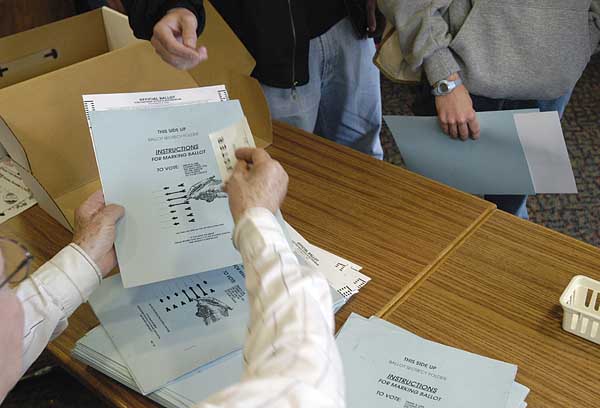
Information on registration and voting in Wisconsin is available here.

The July 29 court ruling that struck down much of Wisconsin’s voter identification law does not affect this election. Voter identification will be required to cast a ballot tomorrow.

Many legislative races in the state are uncontested, but several Assembly races in Dane County are contested:

• 47th Assembly District: Three candidates are vying to replace Robb Kahl (D-Monona): Jimmy Anderson, a Fitchburg attorney and drunk driving victims rights advocate; Julia Arata-Fratta, a Fitchburg accountant and city council member; and Tony Hartmann, a Fitchburg business owner and city council member.

• 78th Assembly District: First-term incumbent Lisa Subeck (D-Madison) is facing challenger Jacob Wischmeier, a hotel manager from Madison. Wischmeier is running as a self-described Bernie Sanders Democrat who has said he would be the most outspoken member of the legislature if elected.

• 80th Assembly District: Long-time Representative Sondy Pope (D-Mount Horeb) is facing challenger Luke Joseph, a materials handler from Oregon. Joseph supports constitutional carry, the right to carry weapons without a permit or mandatory training, and opposes the use of fetal tissue in scientific research

The winners of these primaries will almost certainly be elected in November because there are no Republicans candidates on the ballot for these districts.

ETA: Jimmy Anderson (47th AD), Lisa Subeck (78th AD) and Sondy Pope (80th AD) won their primaries.

Spring Primary Tuesday

election dayThe Wisconsin spring primary election will be held tomorrow, Tuesday, February 16. Polls will be open from 7 am to 8 pm statewide. Photo identification is required to vote.

UW-Madison professor Ken Mayer and others in the Political Science Department will study how voter identification rules affect the length of time it takes to cast a vote and work with local clerks to improve efficiency in future elections.

A primary election for the Wisconsin Supreme Court is the only statewide race on the ballot. Supreme Court Justice Rebecca Bradley faces challengers Joe Donald, Milwaukee County Circuit Judge and JoAnne Kloppenburg, State Court of Appeals Judge. Governor Scott Walker appointed Bradley to the court in October following the death of Justice David Prosser. The top two vote-getters will face off on Tuesday, April 5.

Spring Election Tuesday, April 7

election dayThe spring general election will be held Tuesday, April 7. Polls are open statewide from 7 am until 8 pm. More information on registration and voting in Wisconsin is here.

Photo identification is not required to vote in this election, but will be required to vote in future elections.

One statewide race is on the ballot — incumbent Wisconsin Supreme Court Justice Ann Walsh Bradley faces challenger Rock County Circuit Court Judge James Daley.

Voters will also be asked to vote in a referendum on the election of the Wisconsin Supreme Court Chief Justice. Currently, the longest-serving justice is chief justice. The proposed amendment would select a chief justice through an election by the majority of the Court. The elected chief justice would serve a two-year term.

There is one state legislative race on the ballot — former Representative Duey Stroebel (R-Saukville) faces token write-in opposition to represent the 20th Senate District (Cedarburg, Port Washington, West Bend). The seat became vacant when State Senator Glenn Grothman was elected to Congress last November.

Voters in Madison will choose between incumbent Paul Soglin and challenger Scott Resnick, both graduates of UW-Madison, for mayor.

Spring Primary Election Today

Election_Day_voting12_5570Voters throughout Wisconsin may vote in spring primary elections until 8 pm this evening.

Information on registration and voting in Wisconsin is available here. Photo identification is not required to vote.

PROFS is watching a few races today:

Senate District 20 Three Republicans are vying to replace former State Senator Glenn Grothman who was elected to Congress in November:

  • Former State Representative Duey Stroebel
  • Ozaukee County Chairman Lee Schlenvogt
  • Veteran Tiffany Koehler

No Democrat is on the April ballot, so today’s primary winner is all but guaranteed to win later this spring, increasing the Republican majority to 19-14.

Waukesha County Executive State Senator Paul Farrow of Waukesha is one of four Republican candidates. Farrow said if elected he will remain in the Senate through the state budget process.

Madison Mayor Incumbent Mayor Paul Soglin faces four challengers today:

  • former Dane County Board member Richard Brown
  • activist Christopher Daly
  • former alderperson Bridget Maniaci
  • Alderman Scott Resnick

The top two vote-getters will be on the April ballot.