Five Democrats are vying to replace Representative Francesca Hong, one of five Democrats currently running for governor, in the 76th Assembly District. The district reaches from the isthmus to Madison’s north side, including Maple Bluff.
Isaia Ben-Ami and Juliana Bennett’s replies are below. Dina Nina Martinez-Rutherford, Zoe Sullivan and Tony Castañeda did not respond.

Isaia Ben-Ami
Isaia Ben-Ami’s responses:
What are you goals for your first term in office should you be elected?
We need to repeal ACT 10, fix our school funding formula, and pass a moratorium on data centers. In 2027, Democrats will have a larger say in our state government and possibly even a trifecta. We need to use that political power to meaningfully impact the daily lives of people. We will do that by restoring collective bargaining rights to our public workers and raise wages for workers across the state. We will do that by lowering property taxes and investing in the public schools that are anchors in our communities. We will do that by passing a moratorium on data centers, rolling back their corporate tax credits, and showing that we will stand up to the multi-national corporations trying to exploit our environment. These are all policies that, in a Democratic majority, we can pass in the State Assembly, and with a Democratic Governor, we can make a reality in Wisconsin. As a state representative, I will use my position to ensure that we make the most of our political power to deliver meaningfully impactful policy.
Please describe your qualifications and what sets you apart from your fellow candidates.
I have worked in the legislature for the last 6 years, and I know what it takes to make platform promises into actionable legislation. I have worked with key stakeholders, other legislative offices, and have been involved in negotiations. I am the only candidate with extensive experience in the state legislature. I am also the only candidate who has shown a commitment to electing progressive legislators across the state. In this political moment, we need leaders who will not just state a pro-education platform but are ready to do what is needed to create a state government that supports our institutions of higher education. We only have a short time before 2028 to make lasting change in our government. I am running as a leader who is ready to work for you on day one. Together, we will create a vision for a government that people can believe in.
While UW-Madison is situated in Dane County, its role as an economic engine benefits the entire state. UW-Madison also has unique needs that are different from the other Universities of Wisconsin. Please tell us how you would represent UW-Madison in the Legislature and encourage your colleagues from outside Dane County to understand the statewide benefit of a strong UW-Madison.
As a proud UW-Badger and a lifelong Madisonian, I know that the impact of UW-Madison has on the fastest-growing county in our state. UW-Madison generates professionals who will go on to teach, work, and live across our state. The skills, experiences, and talents that are taught at UW-Madison create the professionals needed in education, agriculture, business, and more. As a legislator, I will tout the economic benefit UW-Madison contributes to our entire state’s economy. In addition, it is important to always recognize that UW-Madison’s status as the flagship university means that it attracts talented individuals from across the nation. We need to uphold its reputation as a world-class university if we want to continue bringing in the talented engineers, scientists, and business professionals who contribute to both the public and private sectors of our state. Lastly, we need to do a better job of highlighting the cultural impact UW-Madison has through liberal arts education. The end goal of education is not creating a better economy, it’s creating a better society. That means valuing the pursuit of knowledge, and supporting artists, philosophers, and musicians that make our society a more vibrant place to live. The limitations of the University are the limitations of the state, and if we do not respect the impact UW-Madison has on our culture and economy, we are doing a disservice to the potential of our state.
While the 2025-27 state budget included a substantial increase for UW System, UW-Madison is facing unprecedented cuts in federal funding – cuts totaling $200 million – while still recovering from a ten-year long tuition freeze and flat state budgets. Meanwhile, the other UW System institutions are facing an enrollment crisis. How would you address these concerns if elected?
The federal cuts to our institutions of hire learning are an attack on progress. But, this attack on progress was not started by Republicans at the federal level, it was started right here in Wisconsin when we decided to keep the state investment in UW-Madison flat, effectively divesting from our flagship state institution over time. We have to be committed to our flagship university’s success if we want to be truly committed to the success of our state. We have to invest in the institutions that have the greatest demand, and that is UW-Madison. More students want to attend our flagship university, and we need to provide the resources necessary to make that university successful.
Wisconsin ranks near the bottom of state funding for four-year post-secondary education, while state funding for two-year technical education is among the best in the country. How would you address this disparity in the Legislature?
Budgets are moral documents. We need to value our four-year institutions because they contribute to the growth & progress of our society. Our post-secondary education systems create professionals that are on the cutting edge of what is possible in the modern world. We cannot continue to undervalue these institutions, or we will sacrifice our progress in science, mathematics, and the liberal arts. While it is wonderful to have access to technical education, and that technical education contributes greatly to our growing economy, it is not the only engine of growth.
UW-Madison is the only university in the Big Ten without bonding authority, severely limiting the university’s ability to efficiently plan and complete much-needed building and renovation projects. Would you be an advocate among your colleagues to grant UW-Madison this essential tool?
Yes. UW-Madison is a flagship university that resides in the fastest-growing part of the state. We need to have continued updates to our infrastructure if we want to continue to be a leader in innovation. I support the use of bonding authority so that we can capitalize our growth in Madison, and ensure we remain a world-class institution for years to come.
Shared governance has long played a role in how UW-Madison functions, in fact, shared governance was once enshrined in state statutes. Would you support legislation returning shared governance language to state statutes if introduced?
Yes. The decisions the university makes directly impact the lives and livelihoods of faculty, staff, and students. As such, they must have a voice in the decision-making process. UW-Madison belongs to all of us, and it is all of our responsibility to steer the ship. I would support returning shared governance language into state statute so that we can restore the rights of faculty, staff, and students.
Work on the 2027-29 state budget will begin shortly after legislators are sworn into office. What are your funding priorities?
Our budget needs to prioritize workers, people, and our planet. In the 2027-29 budget, we must have a repeal of Act 10 and a restoration of the rights taken away from our public sector workers. In addition, we need to invest in our people by making special education a sum sufficient provision, and ensuring every school is given the resources it needs to teach every student in our community. Lastly, we need to fight for a more sustainable economy. We have to invest heavily in a Green New Deal that will create the energy infrastructure we need to move off of fossil fuels and support renewable energy expansion.
PROFS has long advocated for paid family leave for all employees and is pleased that UW-Madison and the Universities of Wisconsin implemented a modest six-week paid parental leave benefit two years ago. We believe this is just the first step and more needs to be done. Will you support initiatives like those offered by Governor Evers that would expand paid leave to state employees and create a paid leave insurance program for public and most private sector employees in the state?
As a legislative aide, I am proud to have worked on Paid-Family and Medical Leave Act and would wholeheartedly support its reintroduction next legislative session. Access to healthcare should not come at the cost of losing your paycheck. In a time where it is harder to afford groceries, childcare, and housing we cannot call healthcare a human right if we do not provide paid family and medical leave.
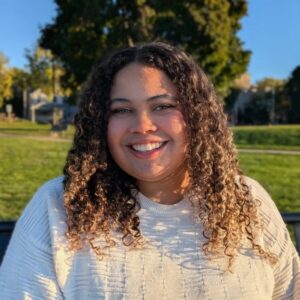
Juliana Bennett
Juliana Bennett’s responses:
What are you goals for your first term in office should you be elected?
My top three priorities are to lower rent and property taxes; fully fund our public schools; and raise wages. We’ll lower property taxes by 44% and fund our schools with the 17¢ Millionaire Tax, AB 1209. We’ll legalize rent control, and use the $2 billion in tax breaks for data centers to build homes instead. We’ll raise our minimum wage to $23/hr and tie it to the cost of living.
I’m ready to fight and win on these issues. We’ll measure progress by affordable homes built, property tax decreases, and wage increases. Along the way, I’m ready to organize across the state to earn votes for the policies Wisconsinites need. And I’ll always be seeking advice and feedback from my constituents to make sure that legislation is addressing their actual problems and making real change.
Please describe your qualifications and what sets you apart from your fellow candidates.
There are three things that set me apart from my opponents:
1. I am the only candidate with experience and a track record of success in city hall, in the state capitol, and in congress. As the campus alder, I served the needs of UW students by creating an original affordable housing program in collaboration with the city and campus. As a federal legislative liaison at the Wisconsin Housing and Economic Development Authority, I got Derek van Orden and Bryan Steil to sign onto bipartisan affordable housing bills. And in my most recent job as the Chief of Staff to Rep. Angelito Tenorio, I drafted the 100% Clean Energy bill.
2. I am the only candidate as of July 8th, 2026 that supports the 17 cent Millionaire Tax. This bill meets one of the most pressing needs of this district, to lower property taxes and fund our schools by supplementing school aid with funds from higher income earners.
3. I am the only candidate endorsed by Madison Area DSA and National DSA.
I’m deeply rooted in community as someone who got their start as a student activist on the UW campus. I’m now ready to take the fight to the state capitol.
While UW-Madison is situated in Dane County, its role as an economic engine benefits the entire state. UW-Madison also has unique needs that are different from the other Universities of Wisconsin. Please tell us how you would represent UW-Madison in the Legislature and encourage your colleagues from outside Dane County to understand the statewide benefit of a strong UW-Madison.
I have four years of experience with elevating the needs of UW-Madison to those unfamiliar and disinterested in serving students on campus. Throughout my time as the UW student alder on the Madison city council, my colleagues told me countless times “I don’t care about students.” This sentiment amongst Madison alders is unfortunately shared amongst many of our representatives in the state capitol.
As state representative, I will make the needs of UW-Madison a priority the same way I did as an alder: organizing and elevating the voices of students, faculty, staff, and alumni. When Madison alders sought to expel student representation from the city council during the redistricting process, I organized a broad coalition, including then Chancellor Blank, to keep the student district together. We won. When luxury high rise developers sought to create unaffordable student housing, I revitalized that coalition to get affordable student housing. We won.
My advocacy as a UW-Madison student and alum will continue in the state legislature. I will fight to fully fund the UW system, invest in affordable student housing, repeal the GOP’s anti-DEI mandate, restore students’ rights to shared governance, and ensure fair compensation and bargaining agreements for faculty and staff. I look forward to making these improvements with an organized coalition of those most directly impacted.
While the 2025-27 state budget included a substantial increase for UW System, UW-Madison is facing unprecedented cuts in federal funding – cuts totaling $200 million – while still recovering from a ten-year long tuition freeze and flat state budgets. Meanwhile, the other UW System institutions are facing an enrollment crisis. How would you address these concerns if elected?
UW is founded upon the Wisconsin Idea – a simple principle that education should influence people’s lives beyond the boundaries of the classroom. Wisconsin Republicans have abandoned this principle which has decimated the university system and the communities that benefit from it.
I will address these issues by restoring Wisconsin Idea. To me, that looks like investing state aid into the UW System to provide a robust educational experience. It looks like prioritizing reopening four-year enrollment of closed UW branches. And it looks like addressing the root causes behind the enrollment crisis. For instance, investment in truly affordable student housing and restoring DEI program funding will help create a welcoming and inclusive campus environment that will attract more students.
Overall, I believe that addressing these concerns first comes through acting upon the demands of those impacted by slashing the UW System budget. For too long, we have been forced to reconcile with the impacts of top-down decisions that from leadership that actively works to silence dissent. As your state representative, I will bring the voice of the many to the state capitol to address these concerns.
Wisconsin ranks near the bottom of state funding for four-year post-secondary education, while state funding for two-year technical education is among the best in the country. How would you address this disparity in the Legislature?
Higher education should be a doorway to opportunity, not a lifetime of debt. Programs at both levels is necessary, but the state must recognize that funding four-year post secondary programs is necessary for the success of students and the state of Wisconsin. As representative, I will fight to give UW-Madison bonding authority immediately and increase state aid to the UW System. I will also advocate to implement statewide student loan forgiveness grants so graduates can build their lives here without being crushed by debt. This will ensure every student can thrive.
UW-Madison is the only university in the Big Ten without bonding authority, severely limiting the university’s ability to efficiently plan and complete much-needed building and renovation projects. Would you be an advocate among your colleagues to grant UW-Madison this essential tool?
Absolutely, yes. We know that not allowing UW-Madison to have bonding authority is a measure to restrict UW-Madison’s financial autonomy. The UW System increased tuition rates in 2024, in part because they do not have the borrowing capacity to remain competitive universities. Because the state does not provide adequate financial resources to UW-Madison, including bonding authority, they take on more students. Then, because UW-Madison cannot build more student housing when they need it, those additional students drive up rents in the local housing market. So, I will advocate to give UW-Madison bonding authority.
Shared governance has long played a role in how UW-Madison functions, in fact, shared governance was once enshrined in state statutes. Would you support legislation returning shared governance language to state statutes if introduced?
Absolutely, yes. As a former member of the UW-Madison Student Services Finance Committee, I know that shared governance is now only a ghost of what it once was in Wisconsin. Students’ rights were stripped by targeted campaigns by the GOP – specifically Robin Vos and Scott Walker – to defund the UW System and reduce the power of faculty and student government to make decisions. They sowed an unprecedented mistrust of shared governance into the legislature that we will need to recover from by restoring authority for faculty and students to act as true partners in decision making with real power.
Work on the 2027-29 state budget will begin shortly after legislators are sworn into office. What are your funding priorities?
The backbone of my core policies (affordable housing, public schools, and raising the minimum wage) is financial reprioritization. Currently, hardworking Wisconsinites pay their taxes expecting our state government to hold up their end of the deal. But, instead of supporting them, our Republican-controlled legislature compiles multibillion dollar surpluses all while handing out tax cuts to the ultra wealthy. Meanwhile, the neoliberal core of our Democratic Party cuts deals with them, pursuing ineffective incremental progress that is far outstripped by the Majority Party’s decade long crusade against public institutions. The cold, hard truth? The leftwing establishment has shelved economic policy, shifting away from bread-and-butter economic needs. That is why my funding priorities are lowering rent and property taxes, fully funding public schools, and raising wages.
PROFS has long advocated for paid family leave for all employees and is pleased that UW-Madison and the Universities of Wisconsin implemented a modest six-week paid parental leave benefit two years ago. We believe this is just the first step and more needs to be done. Will you support initiatives like those offered by Governor Evers that would expand paid leave to state employees and create a paid leave insurance program for public and most private sector employees in the state?
I support expansions to paid family leave for all employees, regardless of whether they work in the public or private sector. I support Representative Francesca Hong’s Paid Family and Medical Leave for All legislation. We need to ensure that all Wisconsinites, including the self-employed, independent contractors, and those at smaller businesses, have access to robust paid family and medical leave. I support the bill’s proposed funding model, which would utilize shared payroll contributions from both employers and employees. I also support its broadening of the definition of family members and added qualifying leave for victims of domestic abuse, sexual abuse, and stalking.